Tell us about the job
Takes about a minute. No obligation.
Sizing a furnace for this house is not a generic calculation. Homes in Horry County, SC run heat about five months a year, from November through March. The burner and heat exchanger cycle through that entire stretch every year, and a unit that is slightly undersized runs longer per cycle to meet the thermostat, stacking wear on the ignition system and the heat exchanger faster than the calendar alone would suggest. A contractor quoting a replacement here works out the actual load the house puts on the equipment before committing to a unit size, because an undersized box that looked adequate at installation reveals itself through the parts that fail first.
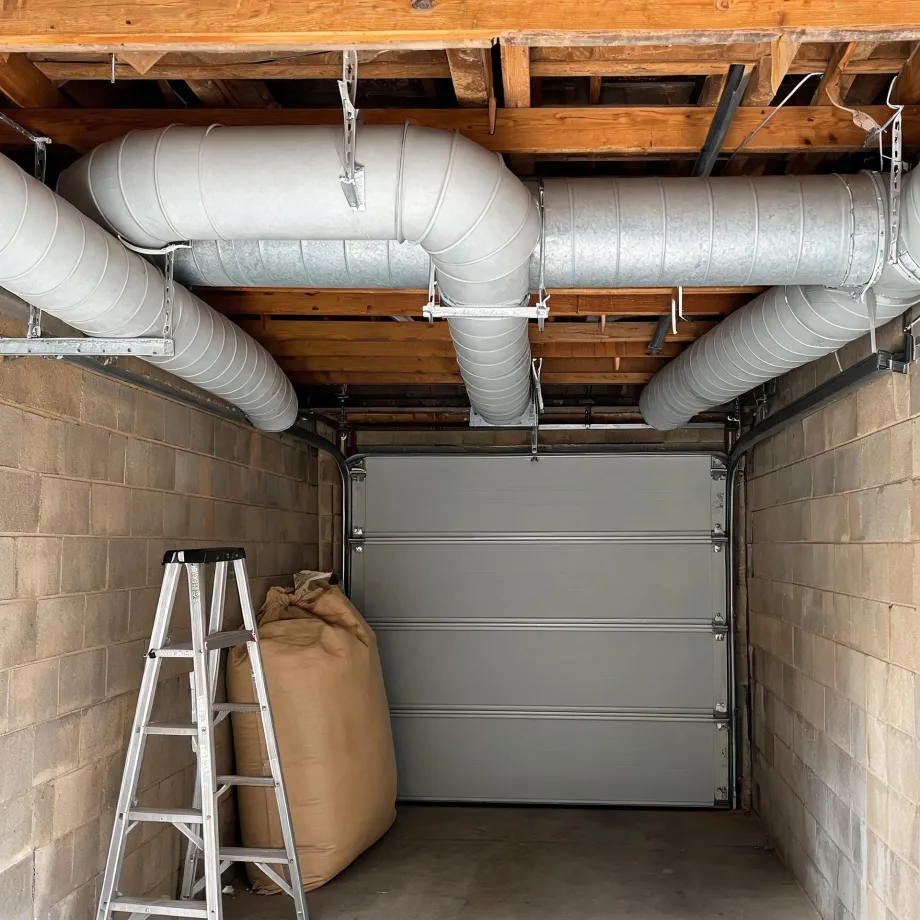
Ductwork sized for an older, lower-output system is the part of a furnace installation that sends the job one way or the other. Half the homes in Horry County, South Carolina were built in 1999 or earlier (2020-2024 ACS 5-year). A contractor installing a new furnace in stock like this has to assess what the existing duct runs can carry before anything else gets priced, because a modern unit pushing more air through undersized or degraded passages will lose efficiency at the distribution side regardless of how well the equipment itself performs. The electrical service is a second check, though furnaces draw less than cooling equipment. What the ductwork turns out to be is where the scope gets settled.
What Gets Installed With a New Furnace
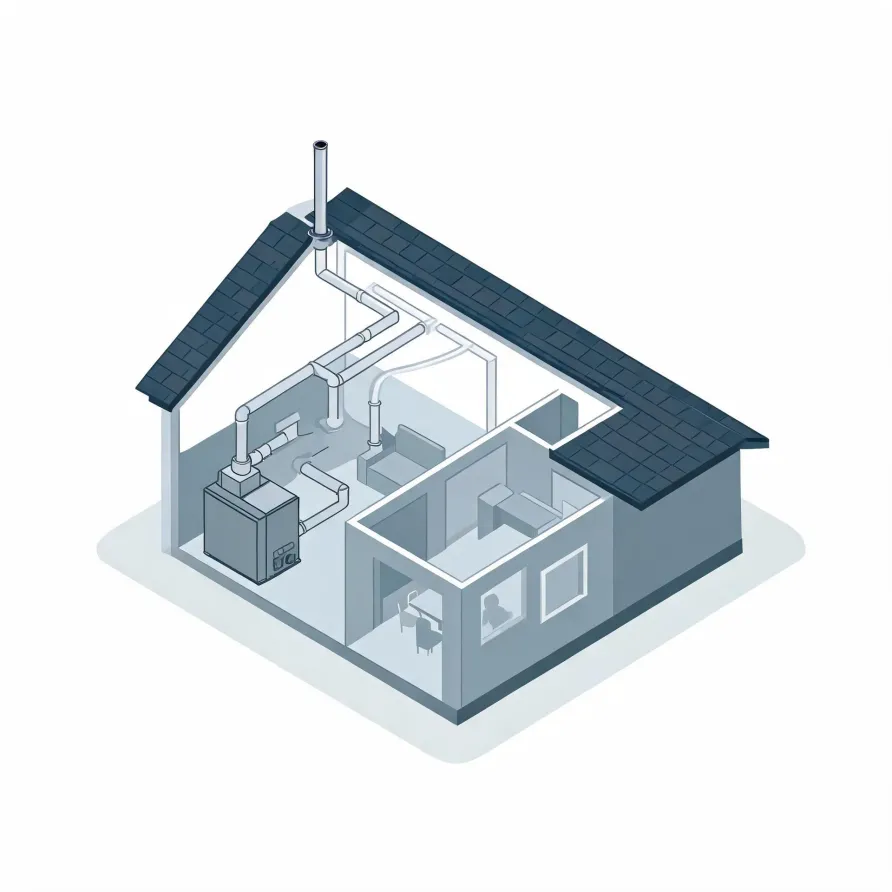
The furnace itself sits in the basement, utility room, or closet and is the unit that generates heat. A burner inside it combusts fuel, and a heat exchanger transfers that warmth to the air moving through the system. The blower fan, housed in the same cabinet, pushes that conditioned air into the duct system.
The flue pipe runs from the furnace up and out of the house, carrying combustion gases away. Alongside it, the thermostat mounts on an interior wall and serves as the control point, reading the temperature in the home and signaling the furnace when to fire. A newer system also includes a condensate drain line if the unit is high-efficiency, routed to a floor drain or utility sink.
The drawing shows a typical layout, and a licensed contractor determines exactly what applies to your house based on its construction, existing setup, and local code.
Get matched in Horry CountyHorry County, by the numbers
211 severe weather events were recorded in Horry County, South Carolina between 2015 and 2024.
NOAA National Centers for Environmental Information, Storm Events Database, bulk CSV export, events 2015-01-01 through 2024-12-31.Half the homes in Horry County, South Carolina were built in 1999 or earlier (2020-2024 ACS 5-year).
U.S. Census Bureau, 2020-2024 American Community Survey 5-Year EstimatesHorry County, South Carolina holds 217,419 housing units (2020-2024 ACS 5-year).
U.S. Census Bureau, 2020-2024 American Community Survey 5-Year EstimatesOwners occupy 77.3% of the occupied homes in Horry County, South Carolina (2020-2024 ACS 5-year).
U.S. Census Bureau, 2020-2024 American Community Survey 5-Year EstimatesFurnace Installation Rules for Horry County, South Carolina5 codes, standards, and licensing rules
What the installation looks like on your end
Non-weatherized gas furnaces manufactured on or after November 19, 2015 must reach 80.0 percent AFUE.
Non-weatherized oil-fired furnaces manufactured on or after November 19, 2015 must reach 83.0 percent AFUE.
Mobile home gas furnaces manufactured on or after November 19, 2015 must reach 80.0 percent AFUE.
Non-weatherized gas furnaces manufactured on or after December 18, 2028 must reach 95.0 percent AFUE, up from the 80.0 percent minimum that applies to units manufactured before that date.
Licensing Rules for HVAC Work in Horry County, South Carolina
South Carolina requires a mechanical contractor license for contracting work whose total cost of construction is greater than ten thousand dollars.
Severe Weather Events in Horry County
Weather puts direct load on heating and cooling equipment, and Horry County's climate shapes how hard a furnace has to work and how long it holds up. That is a local fact, and it bears on every installation decision a contractor makes here.
211 severe weather events, 2015–2024. Source: NOAA National Centers for Environmental Information, Storm Events Database.