Tell us about the job
Takes about a minute. No obligation.
Sizing is the first decision a contractor has to get right before anything else on a furnace install can go well. Homes in Georgetown County, SC run heat about five months a year, from November through March. The burner and ignition system cycle through that season repeatedly, and a furnace that is undersized for the house runs longer per cycle to meet the thermostat, which loads the heat exchanger harder than a properly sized unit would. A contractor working a quote here establishes the actual load the house puts on equipment before picking a unit, because the heating season is long enough that a poor fit shows up in wear and repair bills before the system is old.
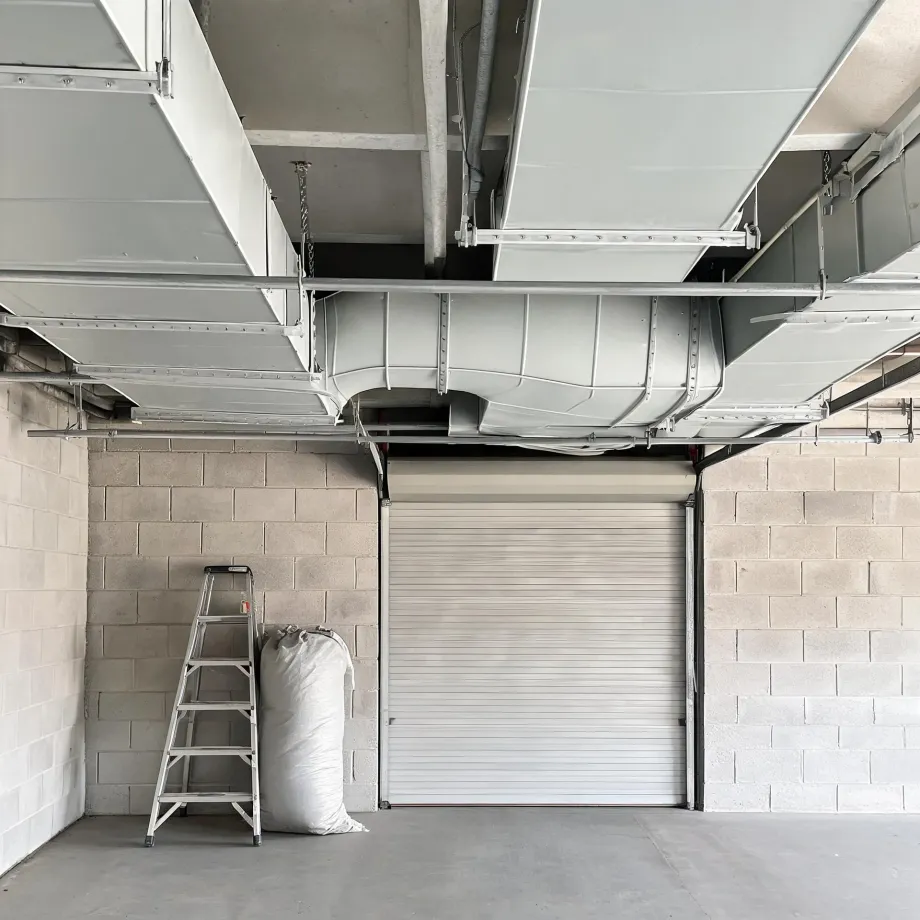
Ductwork sized for a previous generation of equipment is what a contractor has to account for before a furnace installation can be quoted accurately in Georgetown County. Half the homes in Georgetown County, South Carolina were built in 1993 or earlier (2020-2024 ACS 5-year). A house ducted around an older system carries trunk lines, branch runs, and register sizing that a new furnace may or may not pull air through efficiently. The electrical service is a second check, since panel capacity for a modern unit is not guaranteed in stock of this vintage. What those two assessments turn up is what sets the scope of the job.
What Gets Installed With a New Furnace
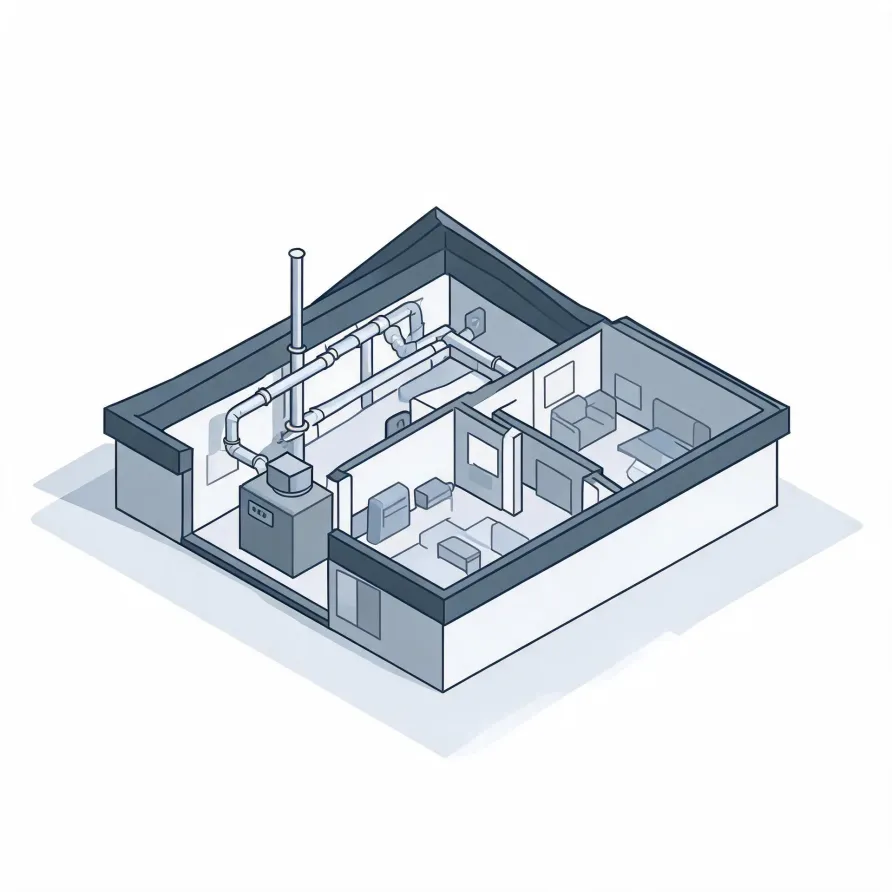
The furnace itself sits in a mechanical space, most often a basement, utility closet, or crawl space. It is the box that produces heat, burning fuel or running electrical resistance elements to warm the air that moves through the house. The air handler, if separate, lives in the same general area and moves conditioned air into the duct system.
The thermostat mounts on an interior wall and is the control point the household touches every day, telling the system when to run and at what temperature. A flue or exhaust vent runs from the furnace to an exterior wall or the roof, carrying combustion gases out of the living space.
The drawing shows a typical layout, and a licensed contractor determines exactly which components and configurations apply to your home.
Get matched in Georgetown CountyGeorgetown County, SC, by the numbers
78 severe weather events were recorded in Georgetown County, South Carolina between 2015 and 2024.
NOAA National Centers for Environmental Information, Storm Events Database, bulk CSV export, events 2015-01-01 through 2024-12-31.Half the homes in Georgetown County, South Carolina were built in 1993 or earlier (2020-2024 ACS 5-year).
U.S. Census Bureau, 2020-2024 American Community Survey 5-Year EstimatesGeorgetown County, South Carolina holds 37,173 housing units (2020-2024 ACS 5-year).
U.S. Census Bureau, 2020-2024 American Community Survey 5-Year EstimatesOwners occupy 84.0% of the occupied homes in Georgetown County, South Carolina (2020-2024 ACS 5-year).
U.S. Census Bureau, 2020-2024 American Community Survey 5-Year EstimatesCodes & Standards Governing Furnace Installation in Georgetown County, South Carolina5 sourced rules and standards
What the installation actually looks like
Non-weatherized gas furnaces manufactured on or after November 19, 2015 must reach 80.0 percent AFUE.
Non-weatherized oil-fired furnaces manufactured on or after November 19, 2015 must reach 83.0 percent AFUE.
Mobile home gas furnaces manufactured on or after November 19, 2015 must reach 80.0 percent AFUE.
Non-weatherized gas furnaces manufactured on or after December 18, 2028 must reach 95.0 percent AFUE, up from the 80.0 percent minimum that applies to units manufactured before that date.
Licensing and Legal Requirements in Georgetown County, South Carolina
South Carolina requires a mechanical contractor license for contracting work whose total cost of construction is greater than ten thousand dollars.
Severe Weather Events in Georgetown County
Georgetown County's weather puts real demands on heating and cooling equipment over its lifetime. A furnace sized and installed for local conditions holds up differently than one built to a generic spec, which is why the weather record here is a practical part of the installation conversation.
78 severe weather events, 2015–2024. Source: NOAA National Centers for Environmental Information, Storm Events Database.