Tell us about the job
Takes about a minute. No obligation.
A contractor quoting a furnace installation in Dillon County has to establish the true heating load before anything else, because the burner and heat exchanger will be called on heavily enough that an undersized or oversized unit shows its flaw in the form of cracked exchangers and ignition wear sooner than it would in a milder run. Homes in Dillon County, SC run heat about five months a year, from November through March. That kind of sustained cycling puts the heat exchanger through repeated thermal expansion and contraction, and a unit installed without a proper load calculation carries that stress on parts that were already working against the wrong duty cycle from day one.
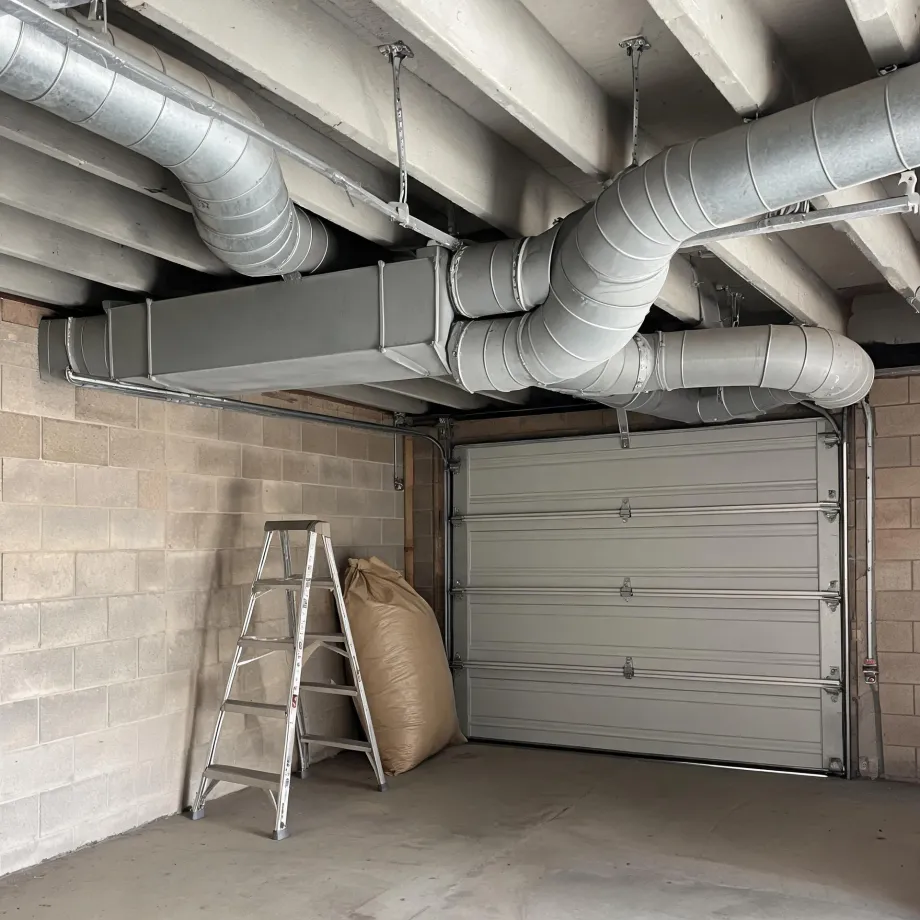
Ductwork laid in for a system that has since been replaced carries its own geometry, its own sizing, and its own path through the house. Whether it will move air the way a new furnace needs it to is the first question a contractor opens up, not the last. Half the homes in Dillon County, South Carolina were built in 1984 or earlier (2020-2024 ACS 5-year). That means a large share of the houses a contractor walks into here are running ductwork that was never designed for what sits in the utility room now, and the fit between the two is what gets priced, not assumed.
What Gets Installed With a New Furnace
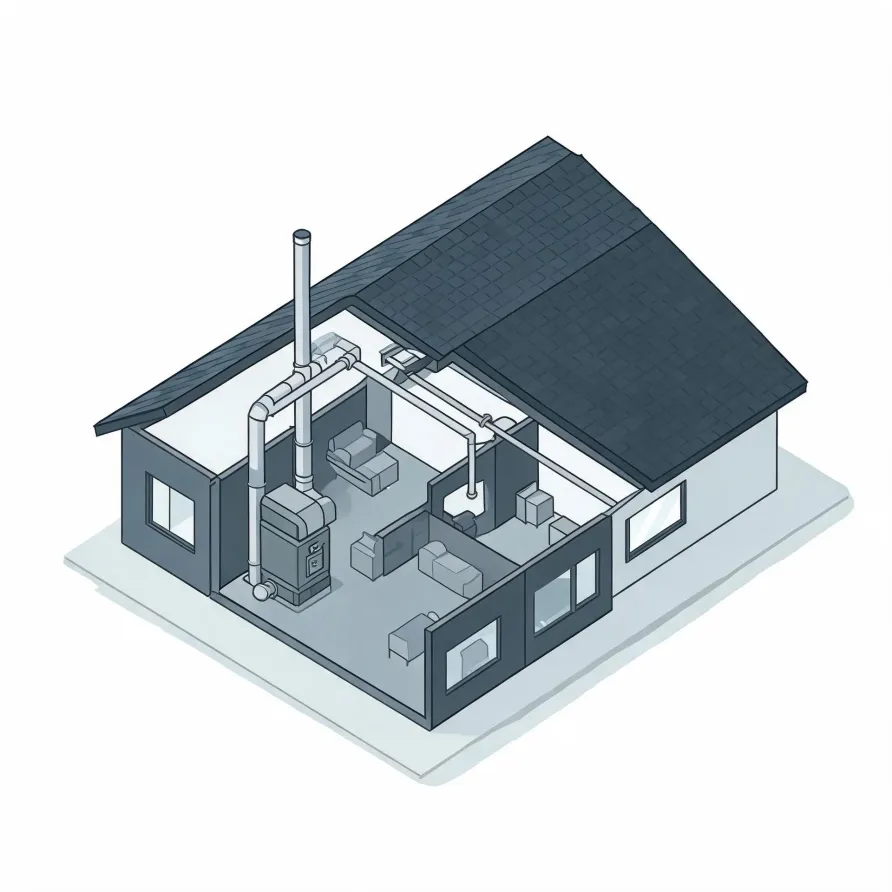
The furnace itself sits in a mechanical room, basement, or utility closet and is the central piece of the installation. A contractor sets it on a stable surface, connects it to the gas supply, and ties it into the home's existing duct openings. The flue pipe runs from the furnace cabinet to an exterior wall or the roof, carrying combustion exhaust out of the house.
The thermostat mounts on an interior wall where it reads the air temperature and signals the furnace when to fire. A new furnace also comes with a filter housing at the return-air intake, which a contractor positions to intercept dust before it reaches the heat exchanger. Both pieces are part of what gets placed and wired during the same visit.
The drawing shows a representative layout, and a licensed contractor determines exactly what applies to the configuration of your house.
Get matched in Dillon CountyDillon County, by the numbers
48 severe weather events were recorded in Dillon County, South Carolina between 2015 and 2024.
NOAA National Centers for Environmental Information, Storm Events Database, bulk CSV export, events 2015-01-01 through 2024-12-31.Half the homes in Dillon County, South Carolina were built in 1984 or earlier (2020-2024 ACS 5-year).
U.S. Census Bureau, 2020-2024 American Community Survey 5-Year EstimatesDillon County, South Carolina holds 12,914 housing units (2020-2024 ACS 5-year).
U.S. Census Bureau, 2020-2024 American Community Survey 5-Year EstimatesOwners occupy 64.7% of the occupied homes in Dillon County, South Carolina (2020-2024 ACS 5-year).
U.S. Census Bureau, 2020-2024 American Community Survey 5-Year EstimatesFurnace Installation Rules for Dillon County, South Carolina5 sourced codes and standards
What the Installation Actually Looks Like
Non-weatherized gas furnaces manufactured on or after November 19, 2015 must reach 80.0 percent AFUE.
Non-weatherized oil-fired furnaces manufactured on or after November 19, 2015 must reach 83.0 percent AFUE.
Mobile home gas furnaces manufactured on or after November 19, 2015 must reach 80.0 percent AFUE.
Non-weatherized gas furnaces manufactured on or after December 18, 2028 must reach 95.0 percent AFUE, up from the 80.0 percent minimum that applies to units manufactured before that date.
Licensing Rules for HVAC Work in Dillon County, South Carolina
South Carolina requires a mechanical contractor license for contracting work whose total cost of construction is greater than ten thousand dollars.
Severe Weather Events in Dillon County
Weather puts a measurable load on heating and cooling equipment, and that load varies by location. How hard a furnace has to work over its life is a local fact, which is why the pattern of severe weather in this county belongs on a page about installation.
48 severe weather events, 2015–2024. Source: NOAA National Centers for Environmental Information, Storm Events Database.