Tell us about the job
Takes about a minute. No obligation.
Sizing a furnace for a Marlboro County home is not a calculation a contractor can run off a national chart and move on. Homes in Marlboro County, SC run heat about five months a year, from November through March. A burner and heat exchanger that cycle through that kind of sustained demand accumulate wear in the components that fire and extinguish repeatedly, and a system that was undersized at installation, or whose ductwork was never balanced to the load, will show heat exchanger fatigue and ignition failures sooner than a properly commissioned one. The installer's job is to run a load calculation that accounts for the house envelope here, then set up the system so it runs in long, efficient cycles rather than short, labored ones.
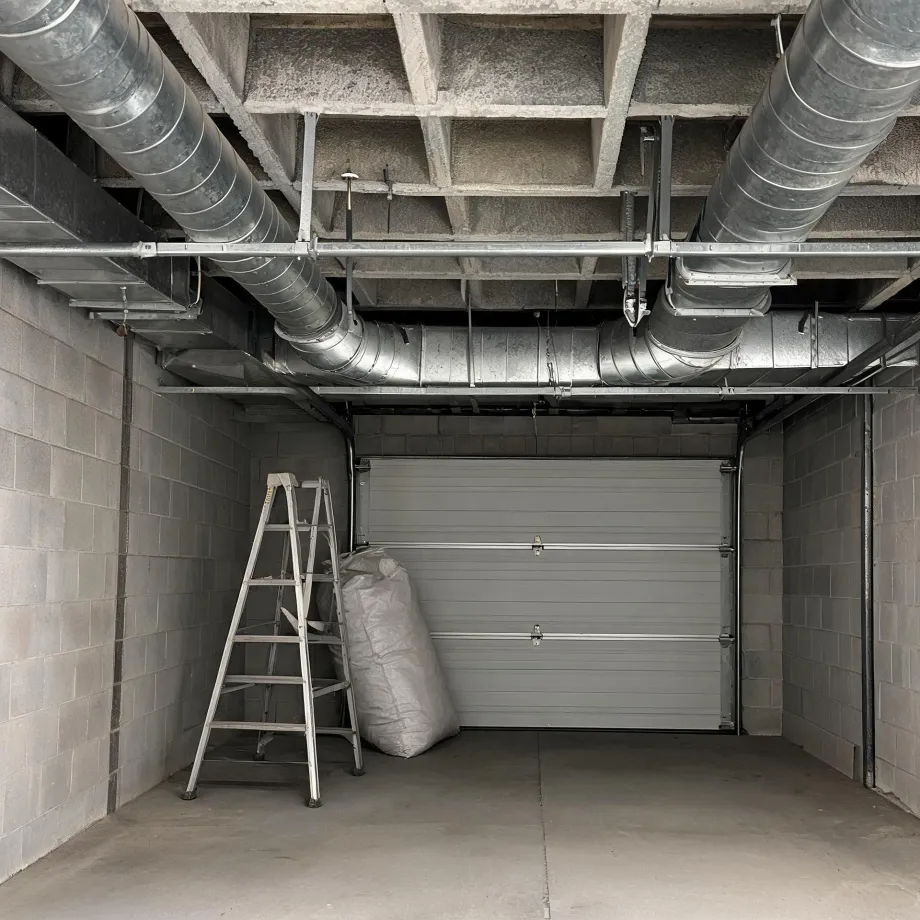
Ductwork sized for a system that no longer exists is what a contractor finds behind the walls of a significant share of Marlboro County homes. Half the homes in Marlboro County, South Carolina were built in 1977 or earlier (2020-2024 ACS 5-year). That gap between what the house was built to carry and what a current furnace delivers is where installation gets complicated. If the existing ducts are too narrow or the runs too long, the new unit cannot perform to spec regardless of what it is rated at, and the contractor has to address the distribution before the equipment question is fully settled.
What Gets Installed With a New Furnace
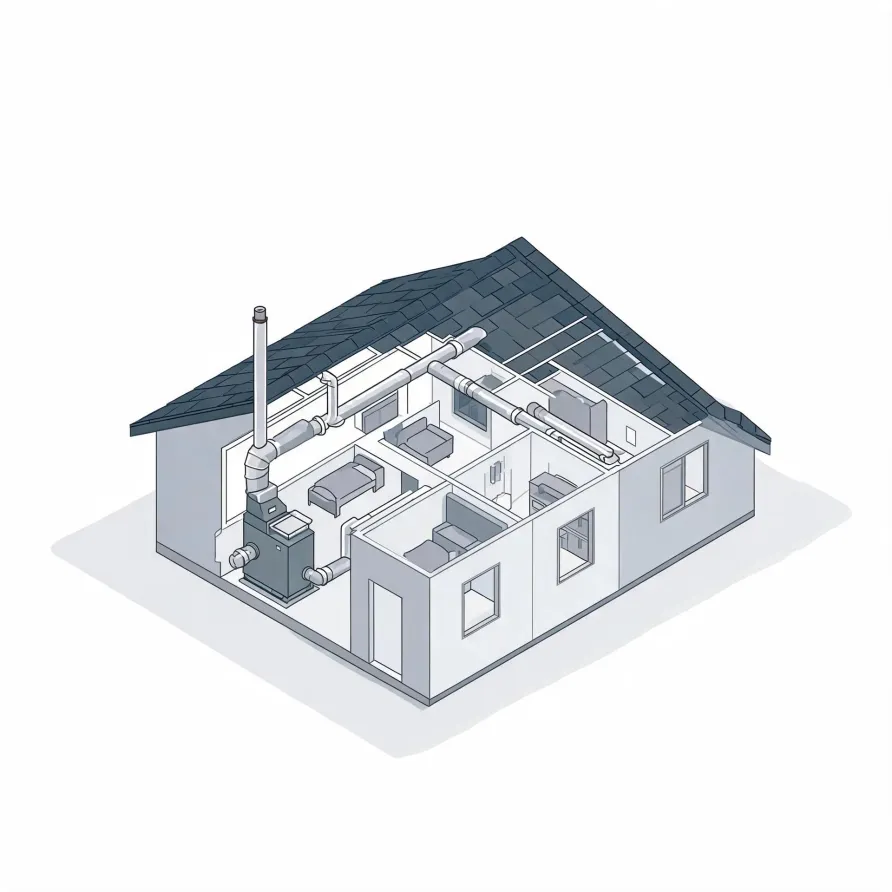
The furnace itself sits in a mechanical room, basement, or utility closet and is the unit that generates heat. A burner assembly inside it burns fuel to produce hot air, and a heat exchanger passes that heat into the airstream the blower pushes through the house.
The blower motor, housed inside the furnace cabinet, drives conditioned air out through the supply side of the duct system. The flue pipe runs from the furnace to an exterior wall or rooftop, carrying combustion gases out of the house. A thermostat, mounted on an interior wall, is what the homeowner uses to control the whole system.
The drawing shows a typical layout, and a licensed contractor determines exactly how each piece fits the conditions in your home.
Get matched in Marlboro CountyMarlboro County, by the numbers
83 severe weather events were recorded in Marlboro County, South Carolina between 2015 and 2024.
NOAA National Centers for Environmental Information, Storm Events Database, bulk CSV export, events 2015-01-01 through 2024-12-31.Half the homes in Marlboro County, South Carolina were built in 1977 or earlier (2020-2024 ACS 5-year).
U.S. Census Bureau, 2020-2024 American Community Survey 5-Year EstimatesMarlboro County, South Carolina holds 12,077 housing units (2020-2024 ACS 5-year).
U.S. Census Bureau, 2020-2024 American Community Survey 5-Year EstimatesOwners occupy 63.0% of the occupied homes in Marlboro County, South Carolina (2020-2024 ACS 5-year).
U.S. Census Bureau, 2020-2024 American Community Survey 5-Year EstimatesFurnace Installation Rules for Marlboro County, South Carolina5 codes & standards
What the Installation Actually Looks Like
Non-weatherized gas furnaces manufactured on or after November 19, 2015 must reach 80.0 percent AFUE.
Non-weatherized oil-fired furnaces manufactured on or after November 19, 2015 must reach 83.0 percent AFUE.
Mobile home gas furnaces manufactured on or after November 19, 2015 must reach 80.0 percent AFUE.
Non-weatherized gas furnaces manufactured on or after December 18, 2028 must reach 95.0 percent AFUE, up from the 80.0 percent minimum that applies to units manufactured before that date.
Licensing Rules for HVAC Work in Marlboro County, South Carolina
South Carolina requires a mechanical contractor license for contracting work whose total cost of construction is greater than ten thousand dollars.
Severe Weather Events in Marlboro County
Weather puts measurable stress on heating and cooling equipment, and what a furnace handles in Marlboro County is a local fact, not a general one. That workload shapes what a proper installation here needs to account for.
83 severe weather events, 2015–2024. Source: NOAA National Centers for Environmental Information, Storm Events Database.