Tell us about the job
Takes about a minute. No obligation.
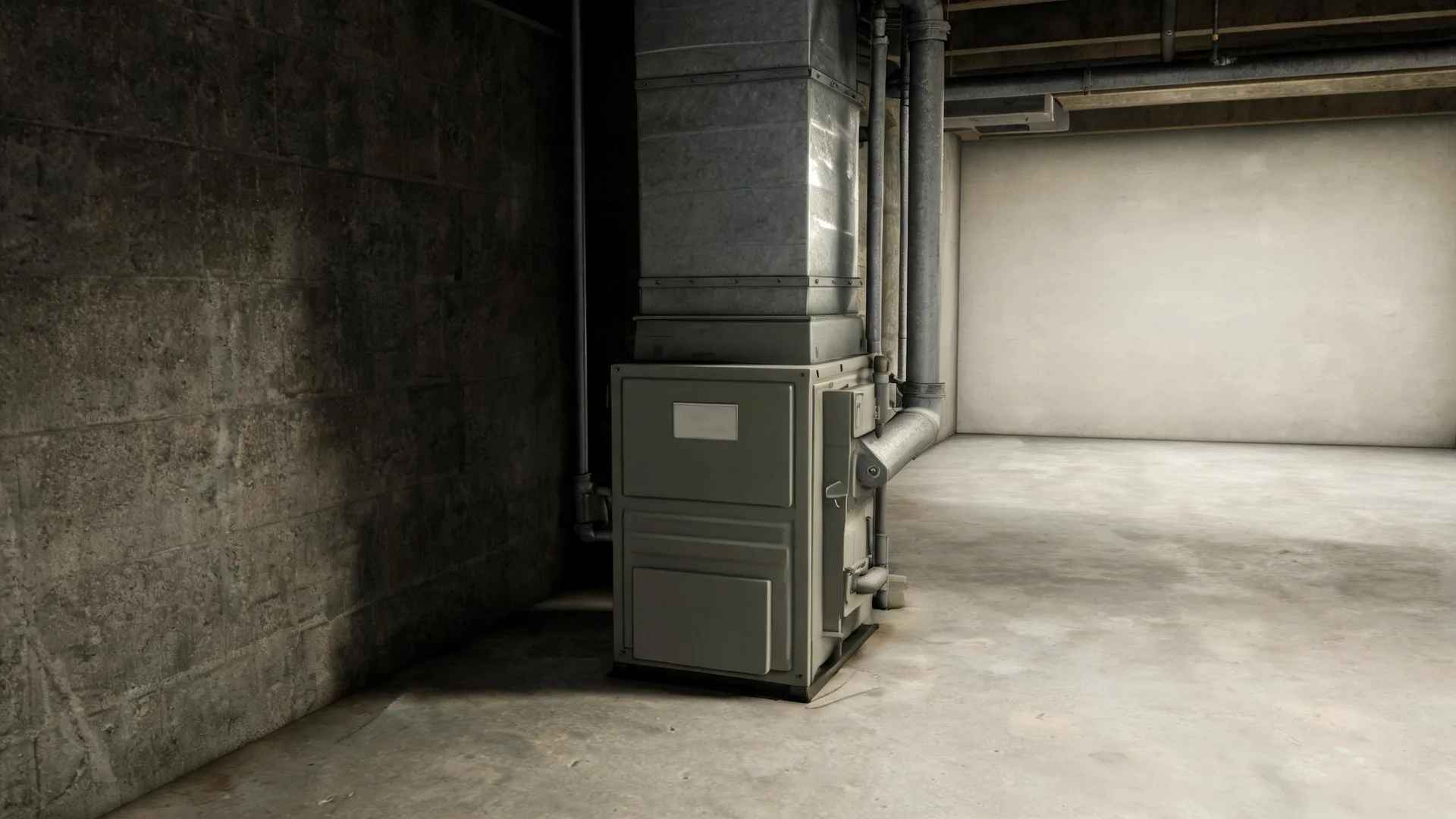
Sizing a furnace for this house starts with understanding what the burner and heat exchanger are actually asked to carry. Homes in Darlington County, SC run heat about five months a year, from November through March. A contractor running a proper load calculation here is accounting for real cycling demand on the ignition system and heat exchanger across those months of active use, not a theoretical load pulled from a national chart. An undersized unit runs longer cycles to reach setpoint, which puts the heat exchanger under cumulative stress it was not rated to absorb. The install quality matters for the same reason: a poor duct seal or a miscalibrated gas valve reveals itself through a season of sustained work.
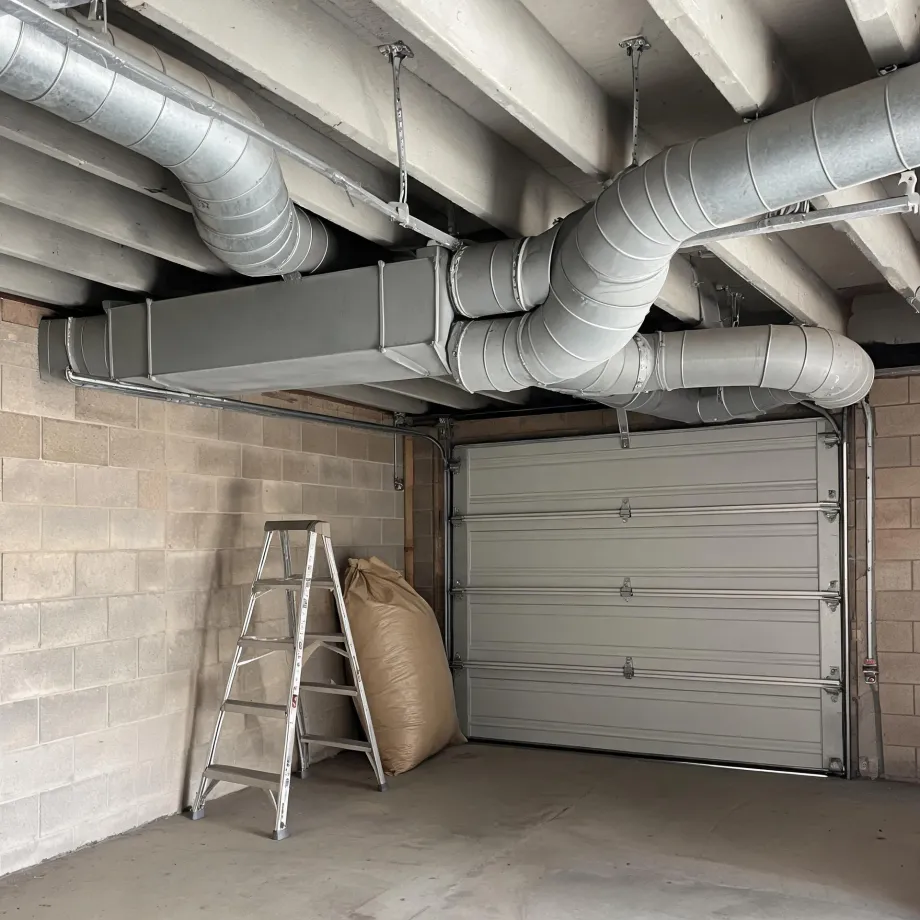
Ductwork laid out for a system that no longer exists is what shapes the installation work in much of Darlington County. Half the homes in Darlington County, South Carolina were built in 1984 or earlier (2020-2024 ACS 5-year). When a new furnace goes in, the existing duct runs determine whether the house moves air the way the new unit expects, and ducts built around older equipment often do not. A contractor scoping the job has to walk the supply and return paths before the unit itself is even priced. Electrical service gets the same check, because a new furnace draws what it draws regardless of what was there before.
What Gets Installed With a New Furnace
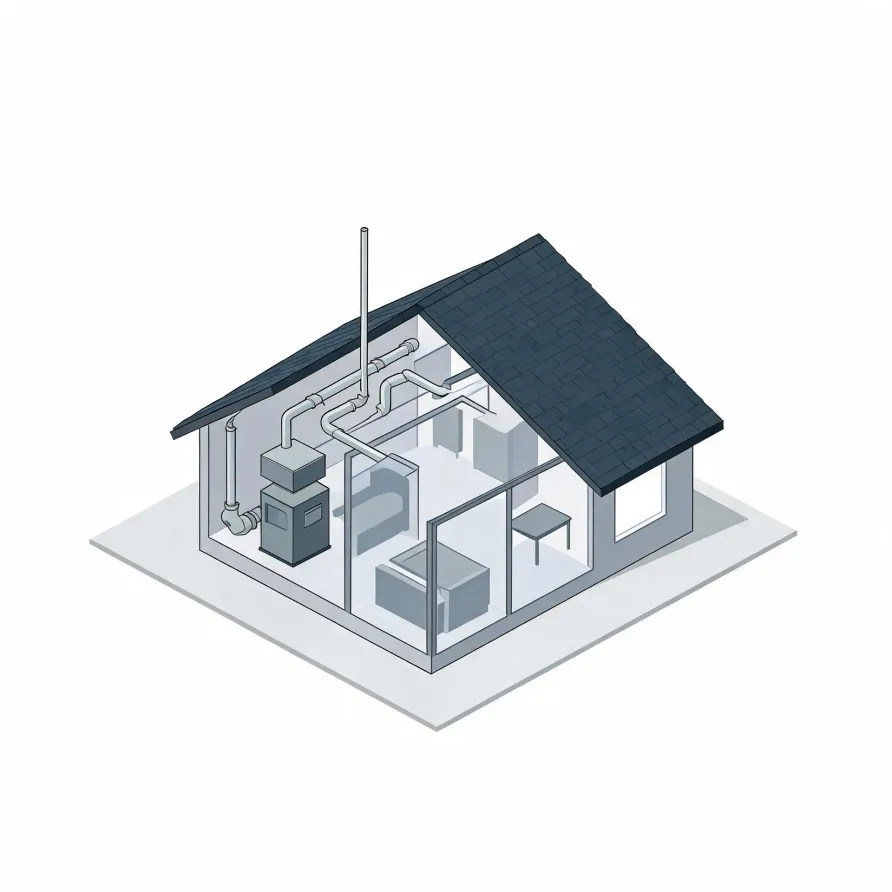
The furnace itself sits inside the house, most often in a basement, utility room, or closet. It is the unit that produces heat, drawing in air, warming it, and sending it back through the home. The flue pipe runs from the furnace to an exterior wall or through the roof, carrying combustion exhaust out of the house.
The air handler or blower assembly is housed within the furnace cabinet and moves conditioned air into the supply side of the duct system. The thermostat mounts on an interior wall and serves as the control point, signaling the furnace when to fire and when to stop.
The drawing shows a general layout of these components, and a licensed contractor determines exactly what applies to your house.
Get matched in Darlington CountyDarlington County, by the numbers
159 severe weather events were recorded in Darlington County, South Carolina between 2015 and 2024.
NOAA National Centers for Environmental Information, Storm Events Database, bulk CSV export, events 2015-01-01 through 2024-12-31.Half the homes in Darlington County, South Carolina were built in 1984 or earlier (2020-2024 ACS 5-year).
U.S. Census Bureau, 2020-2024 American Community Survey 5-Year EstimatesDarlington County, South Carolina holds 29,763 housing units (2020-2024 ACS 5-year).
U.S. Census Bureau, 2020-2024 American Community Survey 5-Year EstimatesOwners occupy 70.9% of the occupied homes in Darlington County, South Carolina (2020-2024 ACS 5-year).
U.S. Census Bureau, 2020-2024 American Community Survey 5-Year EstimatesFurnace Installation Rules for Darlington County, South Carolina5 codes, standards, and laws
What Happens on Installation Day
Non-weatherized gas furnaces manufactured on or after November 19, 2015 must reach 80.0 percent AFUE.
Non-weatherized oil-fired furnaces manufactured on or after November 19, 2015 must reach 83.0 percent AFUE.
Mobile home gas furnaces manufactured on or after November 19, 2015 must reach 80.0 percent AFUE.
Non-weatherized gas furnaces manufactured on or after December 18, 2028 must reach 95.0 percent AFUE, up from the 80.0 percent minimum that applies to units manufactured before that date.
Licensing and Legal Requirements in Darlington County, South Carolina
South Carolina requires a mechanical contractor license for contracting work whose total cost of construction is greater than ten thousand dollars.
Severe Weather Events in Darlington County
Weather puts real hours on heating equipment. A furnace that carries a home through hard winters and volatile shoulder seasons works harder than the spec sheet assumes, and that load shapes what size and grade of equipment makes sense for this area.
159 severe weather events, 2015–2024. Source: NOAA National Centers for Environmental Information, Storm Events Database.