Tell us about the job
Takes about a minute. No obligation.
Homes in Hampton County, SC run heat about five months a year, from November through March. The burner cycles hard through that stretch, and the heat exchanger takes the same repeated thermal stress every time it fires. A contractor working a furnace repair here will look at the ignition system and the heat exchanger first, because those are the parts that absorb the load directly. Ductwork and controls matter, but they can wait until the combustion side is cleared.
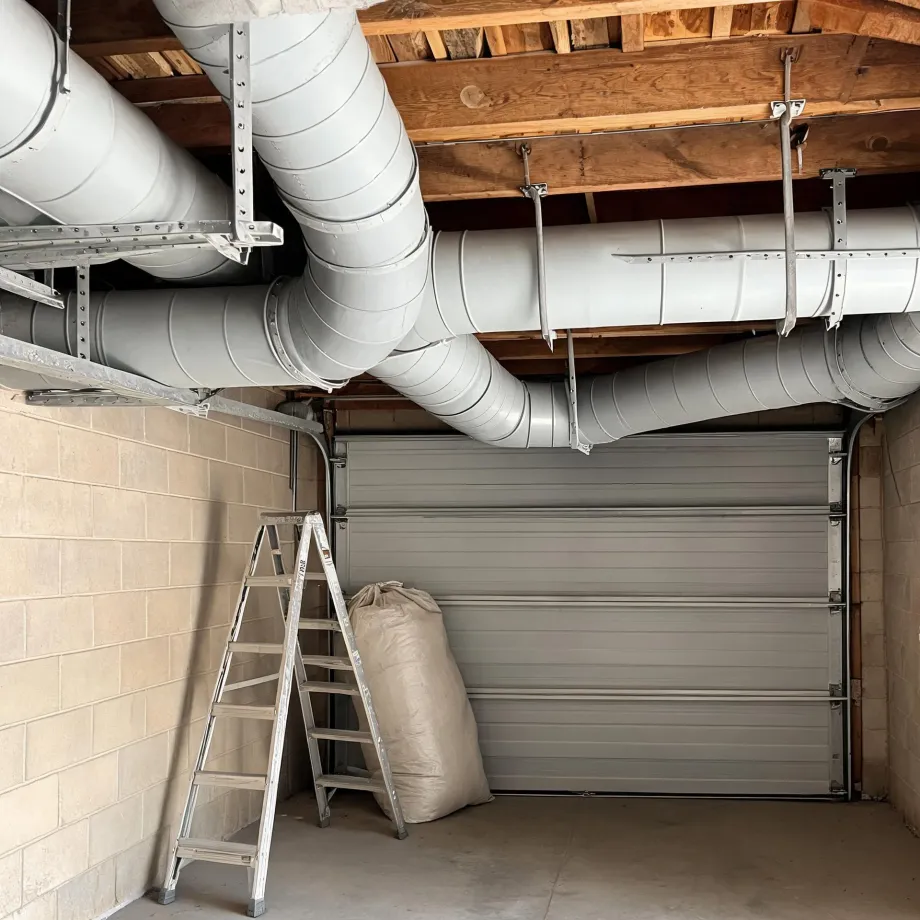
Furnaces in houses of this age often run on components that manufacturers stopped cataloging years ago, and that gap between what the unit needs and what a distributor stocks is where a repair job either resolves quickly or stalls. Half the homes in Hampton County, South Carolina were built in 1984 or earlier (2020-2024 ACS 5-year). A contractor who opens a furnace here and identifies the failed part still has to establish whether that part ships, and from whom, before a repair price means anything. That search shapes the job as much as the diagnosis does.
The Parts of a Furnace a Contractor Checks First
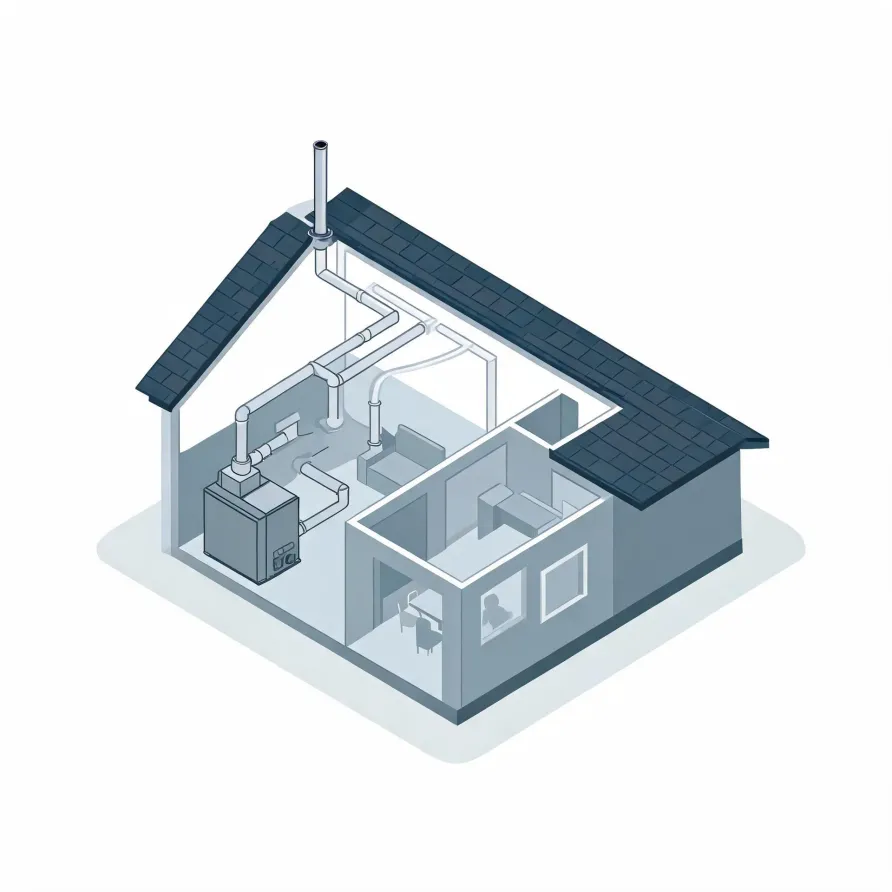
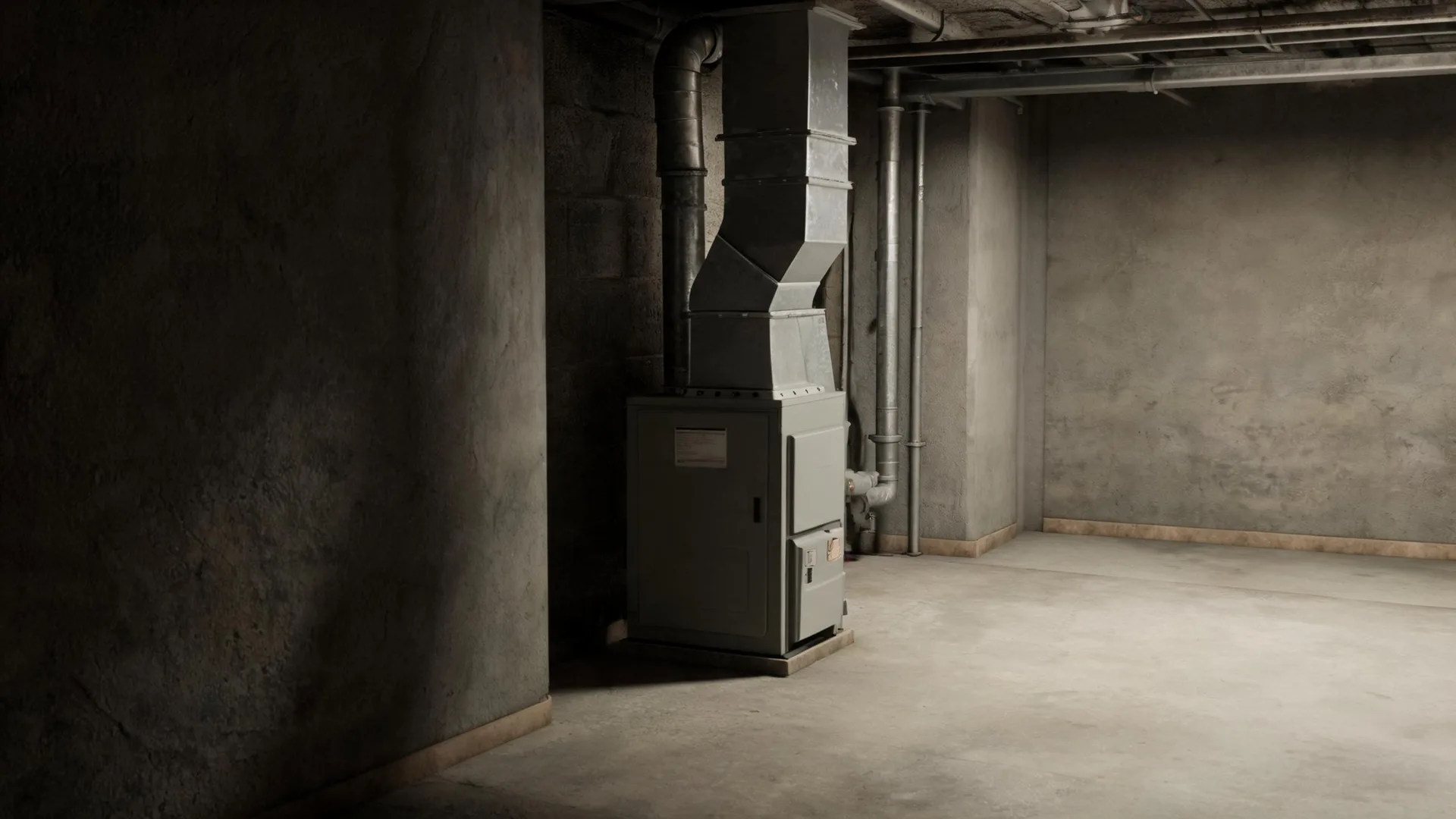
The furnace itself sits in a utility space, basement, or closet and is the piece a contractor reaches first. Inside it, the heat exchanger is the part that does the core work, and a crack or failure there is what stops heat from moving into the air. The burners feed it; when a furnace short-cycles or refuses to light, those burners and the igniter are where a contractor looks.
The blower motor sits within the furnace cabinet and pushes conditioned air out through the supply side of your duct system. Alongside it, the flue or vent pipe runs from the cabinet to an exterior wall or roof and carries combustion gases out of the house. A blocked or corroded flue shows up as a safety lockout, and a failing blower shows up as weak airflow even when the burners are running.
The drawing shows a general layout of a furnace system, and a licensed contractor determines which components apply and what condition they are in for your specific home.
Get matched in Hampton CountyHampton County, by the numbers
156 severe weather events were recorded in Hampton County, South Carolina between 2015 and 2024.
NOAA National Centers for Environmental Information, Storm Events Database, bulk CSV export, events 2015-01-01 through 2024-12-31.Half the homes in Hampton County, South Carolina were built in 1984 or earlier (2020-2024 ACS 5-year).
U.S. Census Bureau, 2020-2024 American Community Survey 5-Year EstimatesHampton County, South Carolina holds 8,645 housing units (2020-2024 ACS 5-year).
U.S. Census Bureau, 2020-2024 American Community Survey 5-Year EstimatesOwners occupy 73.4% of the occupied homes in Hampton County, South Carolina (2020-2024 ACS 5-year).
U.S. Census Bureau, 2020-2024 American Community Survey 5-Year EstimatesCodes & Standards Covering Furnace Repair in Hampton County, South Carolina5 sourced rules and standards
What HVAC Repair Looks Like in Hampton County
Non-weatherized gas furnaces manufactured on or after November 19, 2015 must reach 80.0 percent AFUE.
Non-weatherized oil-fired furnaces manufactured on or after November 19, 2015 must reach 83.0 percent AFUE.
Mobile home gas furnaces manufactured on or after November 19, 2015 must reach 80.0 percent AFUE.
Non-weatherized gas furnaces manufactured on or after December 18, 2028 must reach 95.0 percent AFUE, up from the 80.0 percent minimum that applies to units manufactured before that date.
Licensing and Legal Requirements in Hampton County, South Carolina
South Carolina requires a mechanical contractor license for contracting work whose total cost of construction is greater than ten thousand dollars.
Weather That Works Against Equipment in Hampton County
Furnaces in Hampton County work against what the climate puts on them, and that load shows up as wear, failure, and repair calls. How hard the weather pushes here is a local fact, and it shapes what the equipment in this area faces over time.
156 severe weather events, 2015–2024. Source: NOAA National Centers for Environmental Information, Storm Events Database.