Tell us about the job
Takes about a minute. No obligation.
Sizing a furnace for Hampton County requires a contractor to work from the actual load the house places on the equipment, not from a rough square-footage rule. Homes in Hampton County, SC run heat about five months a year, from November through March. The burner, heat exchanger, and ignition system all accumulate cycles through that window, and a unit that is undersized runs longer per call while one that is oversized short-cycles, both of which put wear on components faster than a properly matched system would. A contractor doing the install quotes the load calculation first, because the equipment choice follows from that number and the ductwork has to move the right volume of air for whichever unit lands in the mechanical room.
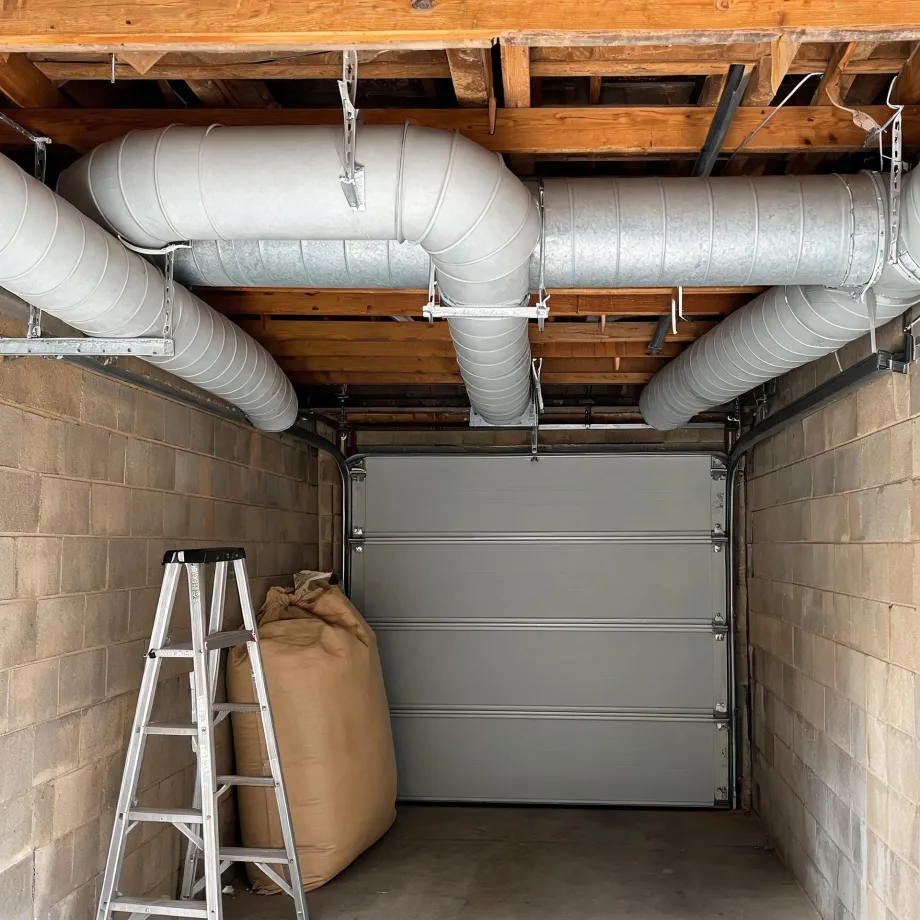
Ductwork laid down for a furnace that was itself replaced years ago carries no guarantee it will move air the way a new unit expects. Trunk sizes, branch runs, and return paths were all spec'd for something different, and a new furnace draws on all three. Half the homes in Hampton County, South Carolina were built in 1984 or earlier (2020-2024 ACS 5-year). That means the duct system in a typical house here deserves a close look before any equipment is selected, because the layout the original builders put in may restrict airflow in ways that limit what a new furnace can actually deliver. Electrical service tends to be a secondary question on furnace work; it is the ductwork that settles what gets installed and what it costs.
What Gets Installed With a New Furnace
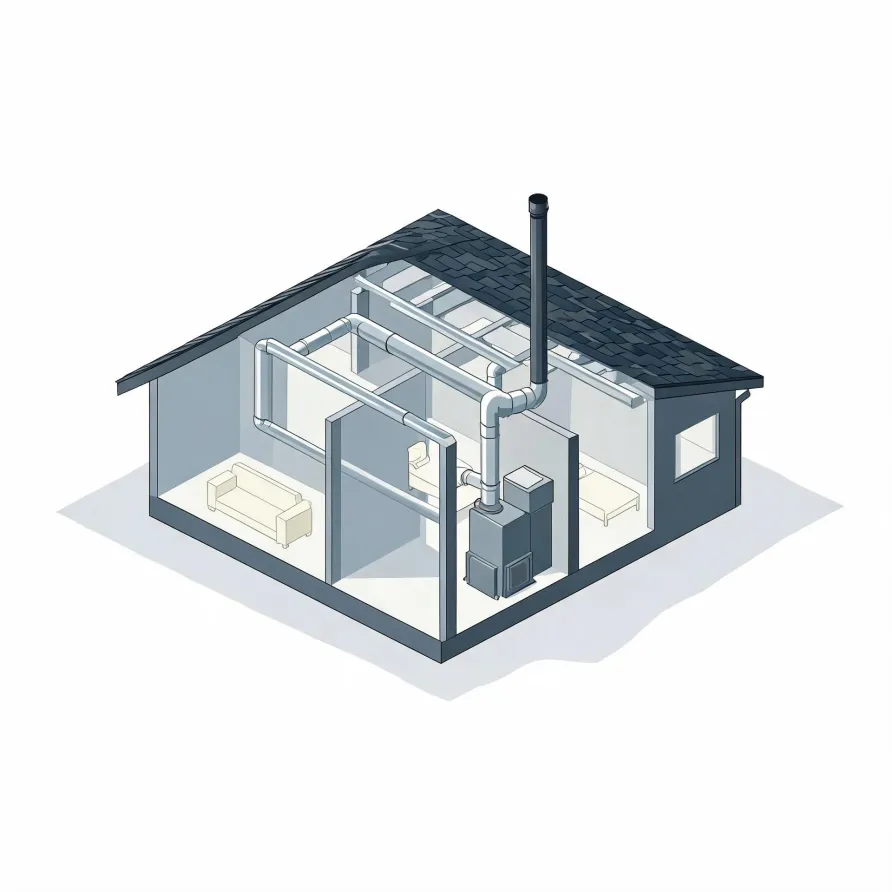
The furnace itself sits in a utility space, basement, or closet and is the unit that generates heat for the home. A contractor mounts it in place, connects it to the gas or fuel supply, and ties it into the home's existing ductwork. The flue pipe runs from the furnace to an exterior vent, carrying combustion gases out of the house.
The air handler or blower compartment moves conditioned air through the supply ducts and back through the return. The thermostat goes on an interior wall and becomes the control point for the whole system. A new furnace installation also includes a fresh filter housing and, depending on the setup, a drain line or condensate management for high-efficiency units.
The drawing shows a typical layout, and a licensed contractor determines exactly what applies to your home.
Get matched in Hampton CountyHampton County, in the numbers that matter
156 severe weather events were recorded in Hampton County, South Carolina between 2015 and 2024.
NOAA National Centers for Environmental Information, Storm Events Database, bulk CSV export, events 2015-01-01 through 2024-12-31.Half the homes in Hampton County, South Carolina were built in 1984 or earlier (2020-2024 ACS 5-year).
U.S. Census Bureau, 2020-2024 American Community Survey 5-Year EstimatesHampton County, South Carolina holds 8,645 housing units (2020-2024 ACS 5-year).
U.S. Census Bureau, 2020-2024 American Community Survey 5-Year EstimatesOwners occupy 73.4% of the occupied homes in Hampton County, South Carolina (2020-2024 ACS 5-year).
U.S. Census Bureau, 2020-2024 American Community Survey 5-Year EstimatesCodes & Standards for Furnace Work in Hampton County, South Carolina5 sourced rules and standards
What happens on installation day in Hampton County
Non-weatherized gas furnaces manufactured on or after November 19, 2015 must reach 80.0 percent AFUE.
Non-weatherized oil-fired furnaces manufactured on or after November 19, 2015 must reach 83.0 percent AFUE.
Mobile home gas furnaces manufactured on or after November 19, 2015 must reach 80.0 percent AFUE.
Non-weatherized gas furnaces manufactured on or after December 18, 2028 must reach 95.0 percent AFUE, up from the 80.0 percent minimum that applies to units manufactured before that date.
Licensing and Legal Requirements in Hampton County, South Carolina
South Carolina requires a mechanical contractor license for contracting work whose total cost of construction is greater than ten thousand dollars.
Severe Weather in Hampton County
Hampton County's climate puts real demands on heating equipment, and those demands are not uniform year to year. A furnace sized and installed for local conditions handles the swings that a generic spec misses.
156 severe weather events, 2015–2024. Source: NOAA National Centers for Environmental Information, Storm Events Database.