Tell us about the job
Takes about a minute. No obligation.
Sizing a furnace for this house means accounting for what the burner and heat exchanger are actually asked to carry each year. Homes in Chester County, SC run heat about five months a year, from November through March. The ignition system cycles repeatedly across those months, and the heat exchanger runs under thermal stress the whole time. A contractor who skips the load calculation and guesses at capacity leaves a system that runs longer per cycle than it should, stressing the same components harder. That shows up as early failure on parts that a correctly sized install would have kept within their rated range.
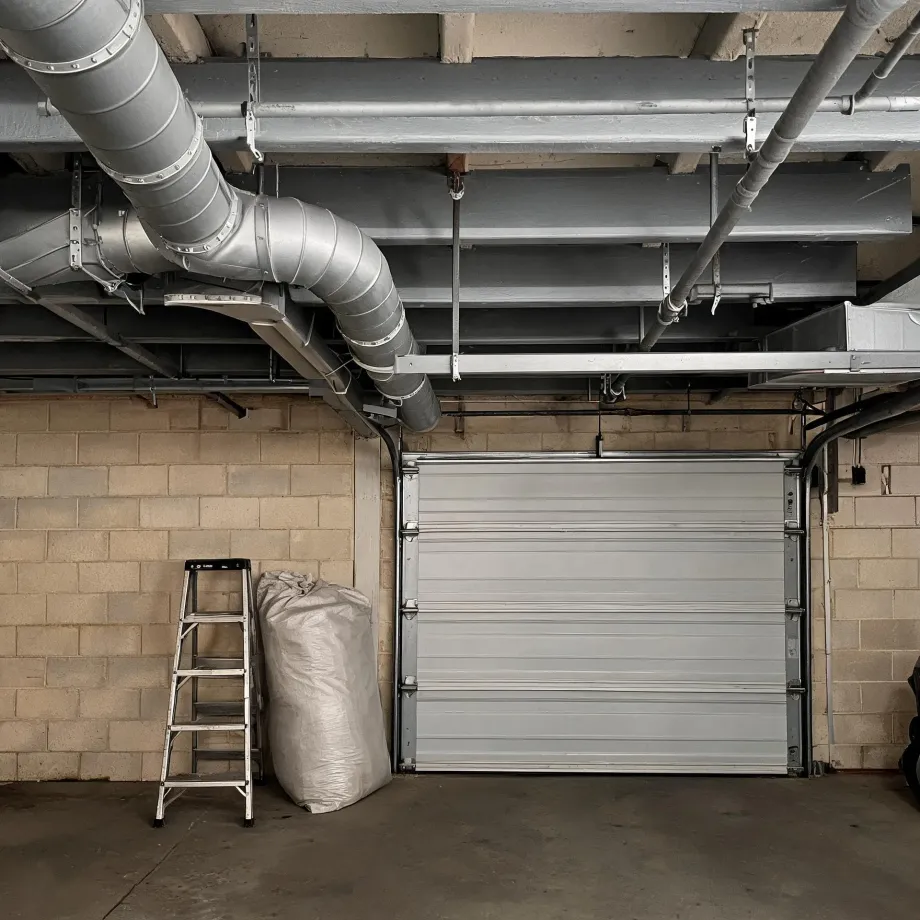
Ductwork sized for the original equipment in a house does not automatically carry what a new furnace puts out. Half the homes in Chester County, South Carolina were built in 1980 or earlier (2020-2024 ACS 5-year). A contractor installing a furnace in this county opens the job by checking whether the existing trunk lines and branch runs match the load the new unit will push through them, and whether the electrical service at the panel supports it. Where those two things line up, the installation is straightforward. Where the ductwork is undersized or the panel is at its limit, that work has to happen before the new furnace goes in.
What Gets Installed With a New Furnace
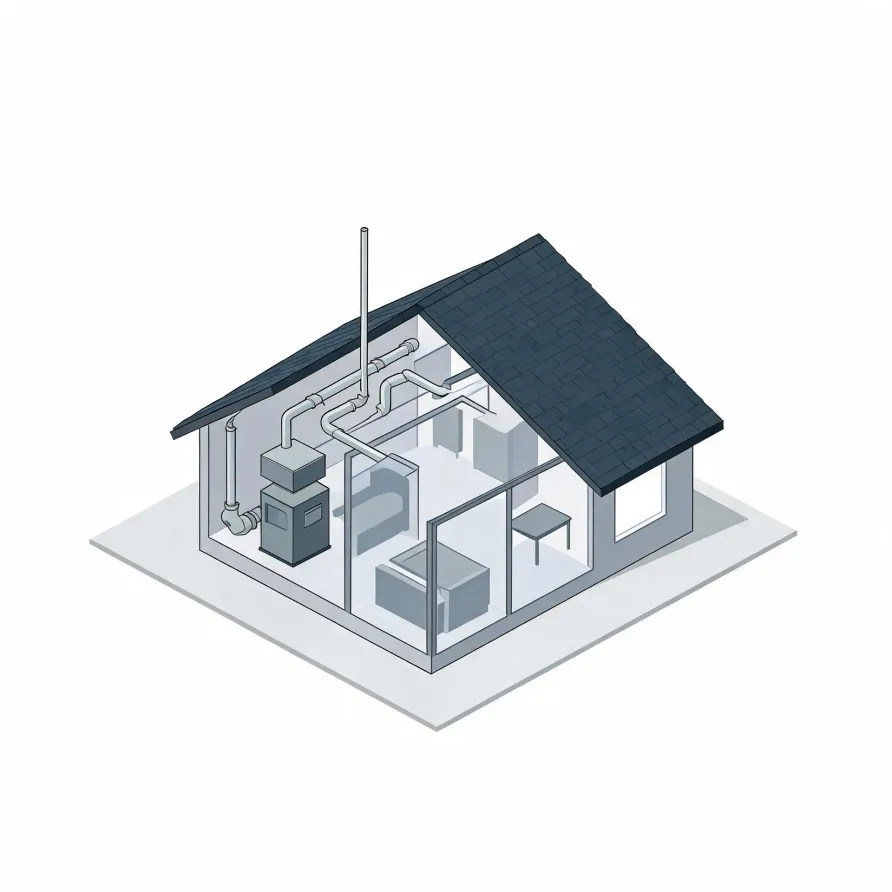
The furnace itself sits in a utility space, a basement, or a closet, and it is the unit that generates heat by burning fuel or running electric heating elements. The air handler, which may be part of the same cabinet or a separate unit, moves conditioned air through the home. These are the pieces the homeowner is paying for at the center of the job.
The thermostat mounts on an interior wall and is the control point for the whole system. Alongside the furnace, a contractor installs the flue or venting pipe that carries combustion gases outside, and may set a new condensate line if the unit is a high-efficiency model that produces drainage.
The drawing shows a general layout of these components, and a licensed contractor determines exactly what applies to the configuration of your house.
Get matched in Chester CountyChester County, SC, by the numbers
61 severe weather events were recorded in Chester County, South Carolina between 2015 and 2024.
NOAA National Centers for Environmental Information, Storm Events Database, bulk CSV export, events 2015-01-01 through 2024-12-31.Half the homes in Chester County, South Carolina were built in 1980 or earlier (2020-2024 ACS 5-year).
U.S. Census Bureau, 2020-2024 American Community Survey 5-Year EstimatesChester County, South Carolina holds 14,807 housing units (2020-2024 ACS 5-year).
U.S. Census Bureau, 2020-2024 American Community Survey 5-Year EstimatesOwners occupy 78.4% of the occupied homes in Chester County, South Carolina (2020-2024 ACS 5-year).
U.S. Census Bureau, 2020-2024 American Community Survey 5-Year EstimatesFurnace Installation Rules on the Books for Chester County, South Carolina5 sourced standards and codes
What the installation looks like from your side
Non-weatherized gas furnaces manufactured on or after November 19, 2015 must reach 80.0 percent AFUE.
Non-weatherized oil-fired furnaces manufactured on or after November 19, 2015 must reach 83.0 percent AFUE.
Mobile home gas furnaces manufactured on or after November 19, 2015 must reach 80.0 percent AFUE.
Non-weatherized gas furnaces manufactured on or after December 18, 2028 must reach 95.0 percent AFUE, up from the 80.0 percent minimum that applies to units manufactured before that date.
Licensing and Legal Requirements in Chester County, South Carolina
South Carolina requires a mechanical contractor license for contracting work whose total cost of construction is greater than ten thousand dollars.
Severe Weather History in Chester County
Heating and cooling equipment carries the full load of whatever the local climate demands, and Chester County's weather record is part of what sets that load. A furnace sized and installed for this area has to account for what the weather here actually does.
61 severe weather events, 2015–2024. Source: NOAA National Centers for Environmental Information, Storm Events Database.