Tell us about the job
Takes about a minute. No obligation.
The burner and ignition system in a Chesterfield County furnace take the full weight of every heating season, cycling on and off through the coldest months until the cold breaks. Homes in Chesterfield County, SC run heat about five months a year, from November through March. A contractor called out for a breakdown checks those high-cycle parts first, because they are where accumulated wear shows up. Heat exchangers crack from repeated thermal stress. Igniters fail from sheer count of starts. If the system has been serviced through recent seasons without those components inspected, a repair quote will reflect that gap.
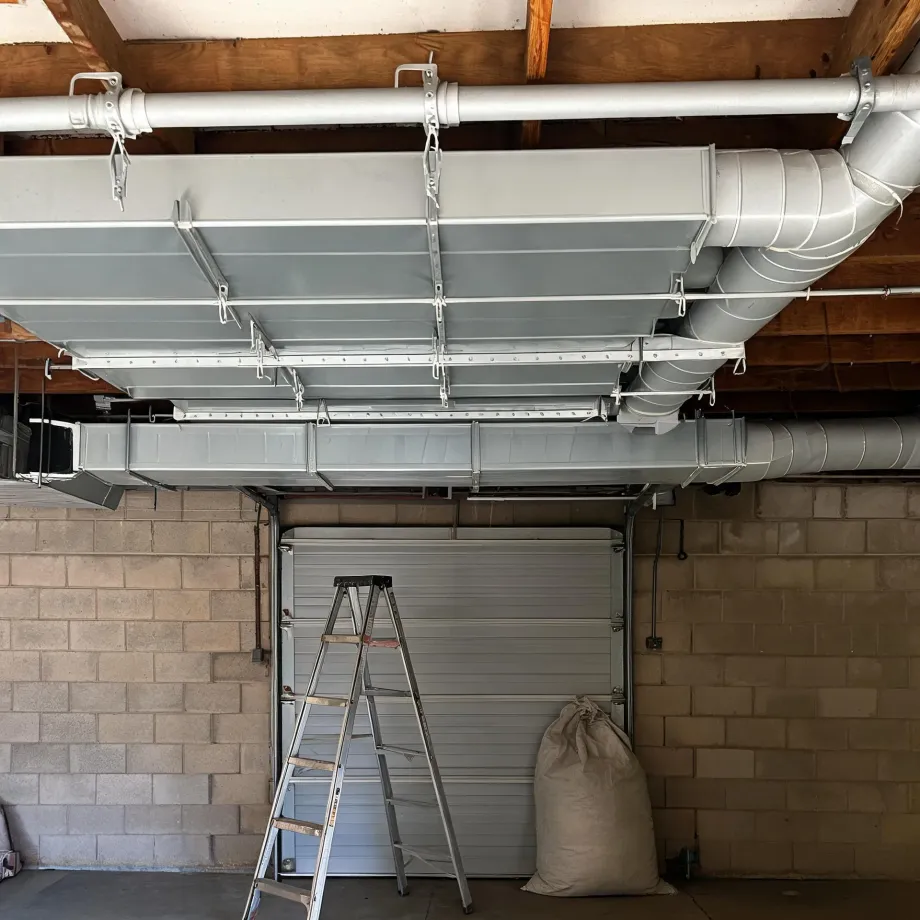
Ductwork in this part of South Carolina was built for what was available then, and the furnace running in it now is a later fit. Half the homes in Chesterfield County, South Carolina were built in 1986 or earlier (2020-2024 ACS 5-year). That gap is where a repair job earns its complexity. When a contractor opens a system on a call like this, what they find in the plenum and the supply runs often adds scope that the initial complaint did not suggest, and whether the parts the furnace takes are still in production is a separate question they have to answer before any quote holds.
The Parts of a Furnace a Contractor Checks First
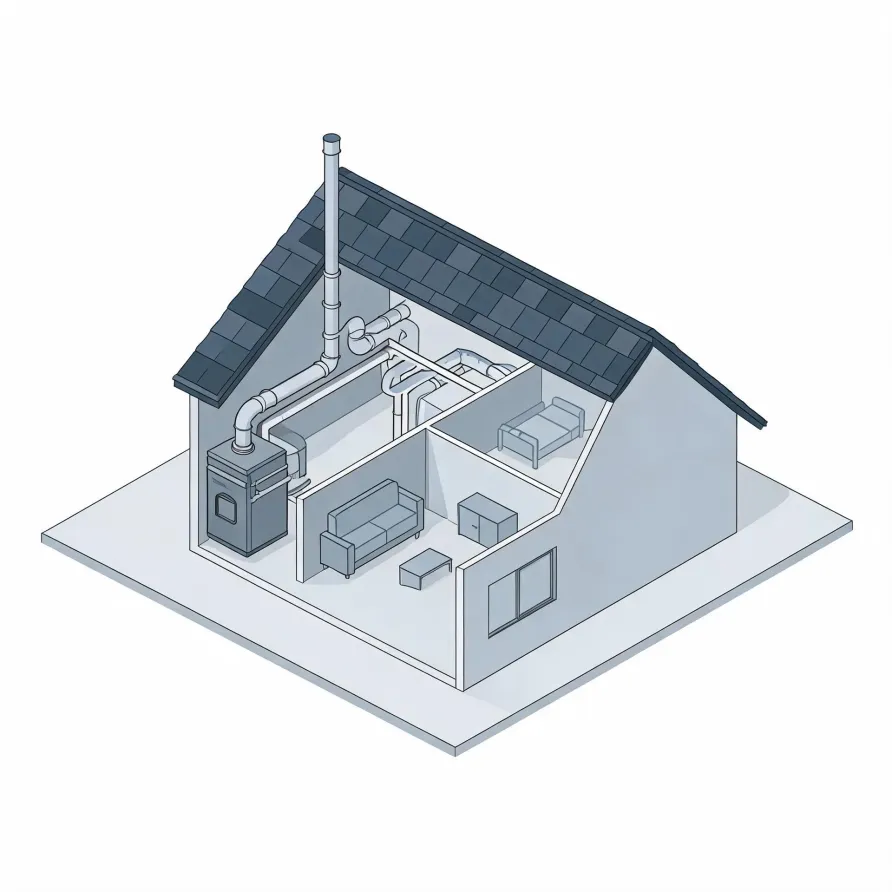
The furnace itself sits in a utility space, basement, or closet and is the piece a contractor opens first. Inside it, the heat exchanger, burner assembly, and blower motor each have a distinct job, and a fault in any one of them shows up differently. A cracked heat exchanger, a dirty burner, or a failing blower motor each produces its own set of symptoms.
The flue pipe runs from the furnace to the outside and carries combustion gases out of the house. Alongside the furnace sits the air handler or return cabinet, and just outside the furnace cabinet the filter holds a position that affects nearly every component downstream. The thermostat on the wall is the last piece a contractor checks, but it is sometimes the first place a problem originates.
The drawing shows a typical furnace layout, and a licensed contractor determines what applies to this particular house and system.
Get matched in Chesterfield CountyChesterfield County, by the numbers
174 severe weather events were recorded in Chesterfield County, South Carolina between 2015 and 2024.
NOAA National Centers for Environmental Information, Storm Events Database, bulk CSV export, events 2015-01-01 through 2024-12-31.Half the homes in Chesterfield County, South Carolina were built in 1986 or earlier (2020-2024 ACS 5-year).
U.S. Census Bureau, 2020-2024 American Community Survey 5-Year EstimatesChesterfield County, South Carolina holds 20,843 housing units (2020-2024 ACS 5-year).
U.S. Census Bureau, 2020-2024 American Community Survey 5-Year EstimatesOwners occupy 72.8% of the occupied homes in Chesterfield County, South Carolina (2020-2024 ACS 5-year).
U.S. Census Bureau, 2020-2024 American Community Survey 5-Year EstimatesRules & Standards Behind Furnace Repair in Chesterfield County, South Carolina5 sourced rules and standards
What the repair visit looks like
Non-weatherized gas furnaces manufactured on or after November 19, 2015 must reach 80.0 percent AFUE.
Non-weatherized oil-fired furnaces manufactured on or after November 19, 2015 must reach 83.0 percent AFUE.
Mobile home gas furnaces manufactured on or after November 19, 2015 must reach 80.0 percent AFUE.
Non-weatherized gas furnaces manufactured on or after December 18, 2028 must reach 95.0 percent AFUE, up from the 80.0 percent minimum that applies to units manufactured before that date.
Licensing Rules for HVAC Repair in Chesterfield County, South Carolina
South Carolina requires a mechanical contractor license for contracting work whose total cost of construction is greater than ten thousand dollars.
Severe Weather Events in Chesterfield County
Extreme weather puts real stress on a furnace. Every hard weather event the county logs is a moment the heating system was working against conditions it was built to handle, and that load accumulates.
174 severe weather events, 2015–2024. Source: NOAA National Centers for Environmental Information, Storm Events Database.