Tell us about the job
Takes about a minute. No obligation.
A contractor quoting a furnace installation in Spartanburg County has to get the load calculation right before anything else, because the burner and heat exchanger will cycle through most of the calendar year with little off time to mask an undersized or poorly fitted unit. Homes in Spartanburg County, SC run heat about seven months a year, from October through April. The ignition system, the heat exchanger, and the blower all accumulate wear in proportion to how often they cycle, and a furnace that was not sized for the actual heat load of the house starts showing stress on those parts earlier than the homeowner expects. Sloppy ductwork sealing or a combustion air shortfall compounds that wear from the first season on.
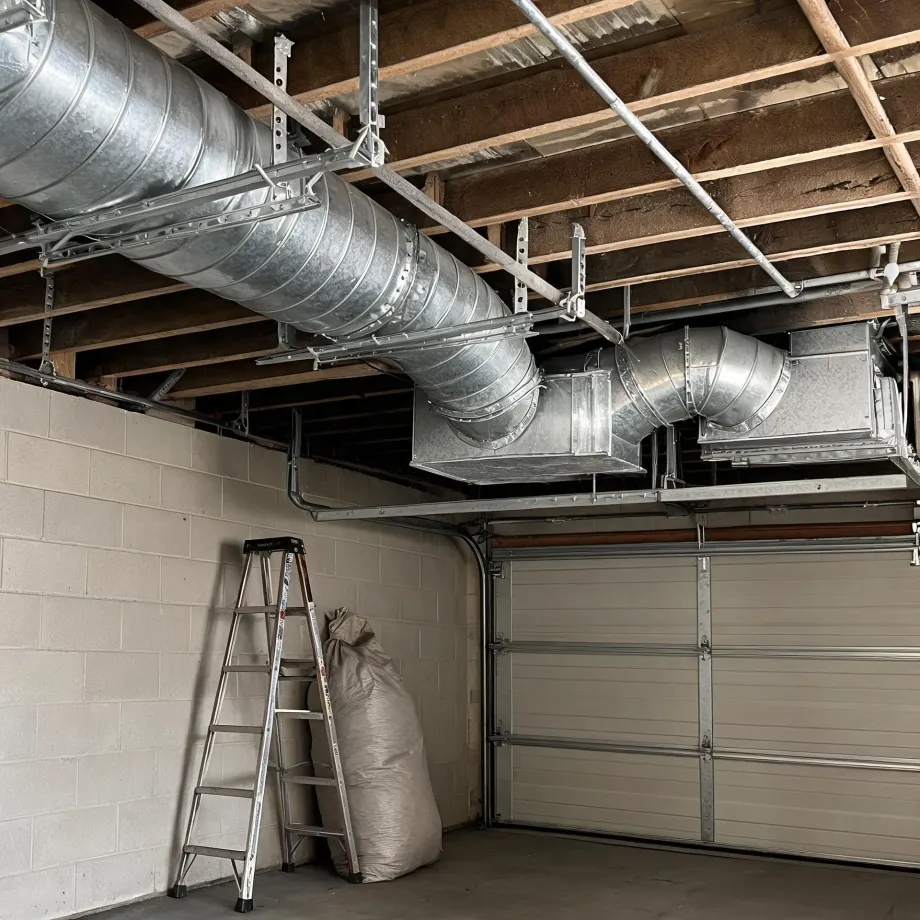
Ductwork routed for equipment that is no longer in the house is what drives the scope of a furnace installation here. Half the homes in Spartanburg County, South Carolina were built in 1990 or earlier (2020-2024 ACS 5-year). A contractor pulling permits and measuring for a new furnace in this county is regularly opening walls and crawl spaces to find duct runs that were built around something different, and the electrical service feeding the system may be in the same position. The furnace itself gets specified once the existing infrastructure is understood, not before.
What Gets Installed With a New Furnace
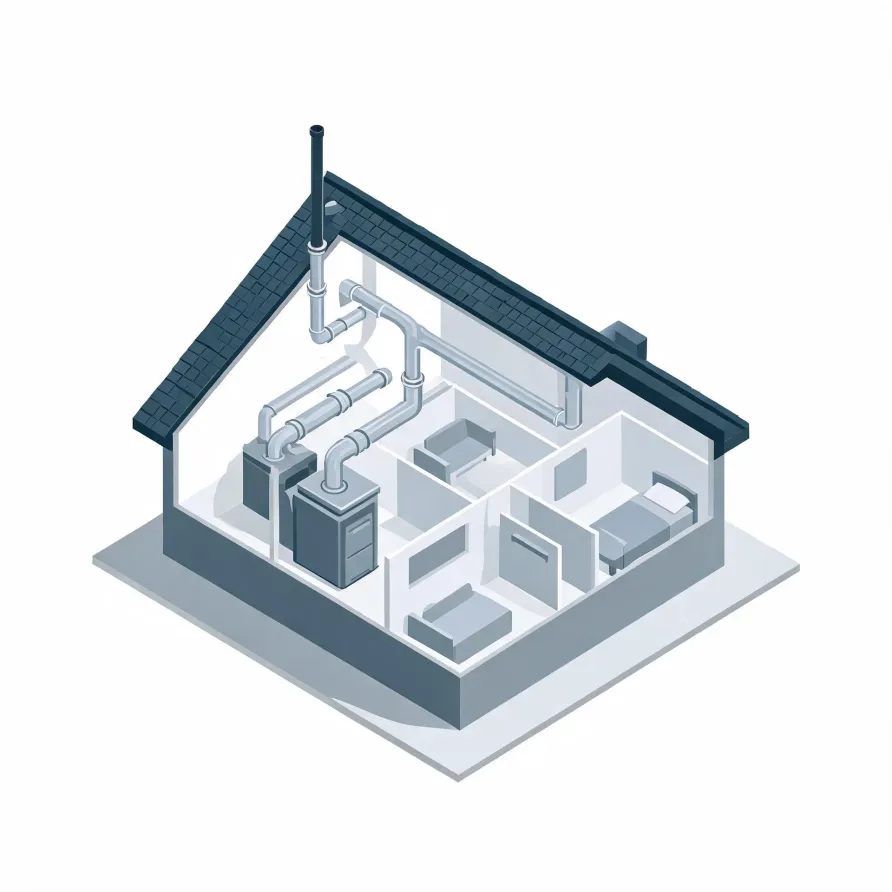
The furnace itself sits in a utility space, a basement, or a dedicated mechanical closet and is the unit that produces heat for the house. A contractor mounts it there, connects it to the fuel supply, and ties it into the home's existing duct openings. That cabinet is what a homeowner buys when they commission a furnace installation.
The flue pipe runs from the furnace to an exterior exhaust point, carrying combustion gases out of the living space. The thermostat goes on an interior wall and gives the occupants control over when the furnace fires. A contractor also fits a new air filter housing at the return-air intake if the existing one will not suit the replacement unit.
The drawing shows a general layout of these components, and a licensed contractor determines exactly how each one fits the specifics of your house.
Get matched in Spartanburg CountySpartanburg County, by the numbers
194 severe weather events were recorded in Spartanburg County, South Carolina between 2015 and 2024.
NOAA National Centers for Environmental Information, Storm Events Database, bulk CSV export, events 2015-01-01 through 2024-12-31.Half the homes in Spartanburg County, South Carolina were built in 1990 or earlier (2020-2024 ACS 5-year).
U.S. Census Bureau, 2020-2024 American Community Survey 5-Year EstimatesSpartanburg County, South Carolina holds 144,170 housing units (2020-2024 ACS 5-year).
U.S. Census Bureau, 2020-2024 American Community Survey 5-Year EstimatesOwners occupy 73.0% of the occupied homes in Spartanburg County, South Carolina (2020-2024 ACS 5-year).
U.S. Census Bureau, 2020-2024 American Community Survey 5-Year EstimatesFurnace Installation Rules for Spartanburg County, South Carolina5 sourced standards and codes
What the installation actually looks like
Non-weatherized gas furnaces manufactured on or after November 19, 2015 must reach 80.0 percent AFUE.
Non-weatherized oil-fired furnaces manufactured on or after November 19, 2015 must reach 83.0 percent AFUE.
Mobile home gas furnaces manufactured on or after November 19, 2015 must reach 80.0 percent AFUE.
Non-weatherized gas furnaces manufactured on or after December 18, 2028 must reach 95.0 percent AFUE, up from the 80.0 percent minimum that applies to units manufactured before that date.
Licensing and Legal Requirements in Spartanburg County, South Carolina
South Carolina requires a mechanical contractor license for contracting work whose total cost of construction is greater than ten thousand dollars.
Severe Weather Events in Spartanburg County
Spartanburg County's weather puts real demands on heating equipment, and those demands shape what a furnace has to handle over its working life. How hard the climate pushes here is a local fact, and it matters when sizing and installing equipment built to last in this area.
194 severe weather events, 2015–2024. Source: NOAA National Centers for Environmental Information, Storm Events Database.