





Profile view of a bearded man wearing a black baseball cap and a dark gray T-shirt against a plain light background.

Why your furnace filter gets dirty fast in South Carolina

Step 1 of 3: Equipment

A furnace filter in South Carolina loads up fast because of what the blower pulls through it most of the year, not just in winter. Summers here run muggy, and that moisture lets dust, pollen and lint clump together on the filter instead of passing through loose. Most homes here heat with electric furnaces, and the blower on an electric furnace often runs on the same ductwork used for cooling, so it's moving air through that same filter across more months than a gas system in a colder state would. A filter that looks fine in a dry climate can be gray and matted here in half the time. Once it's clogged, the blower has to work harder to pull air through, and airflow to the rest of the house drops. That shows up as rooms that take longer to heat, a furnace that runs longer to hit the thermostat setting, and in some systems, a safety switch that shuts the furnace off because it's overheating. Checking the filter more often than the box recommends is worth doing here.

A smiling man in a gray long-sleeved shirt stands in a kitchen looking to the side, with open shelves of dishes, a white mug on the counter, a potted plant, and a view through a doorway into a living room.
A smiling bearded man in a green sweater sits at a white marble kitchen island with a mug, potted plant and bowl of fruit, in a bright white interior with open shelving and an arched doorway.
A smiling man with dark curly hair and a beard, wearing a dark green knit sweater, stands at a white marble kitchen counter with a dark blue mug, with open shelving, pendant lights and a houseplant behind him.
A smiling man in a green ribbed sweater stands behind a wooden table holding a ceramic mug of coffee in a kitchen with white subway tile, shelves of potted plants, and a bowl of fruit.

Most furnaces here heat with electric heat strips or an electric air handler, so the blower runs on the same system that handles cooling all summer, pulling air through that filter whenever the thermostat calls for heat or cool.

That filter is working across both seasons instead of resting half the year, so it reaches the same loaded state in less time than it would somewhere the blower only ran a few cold months.

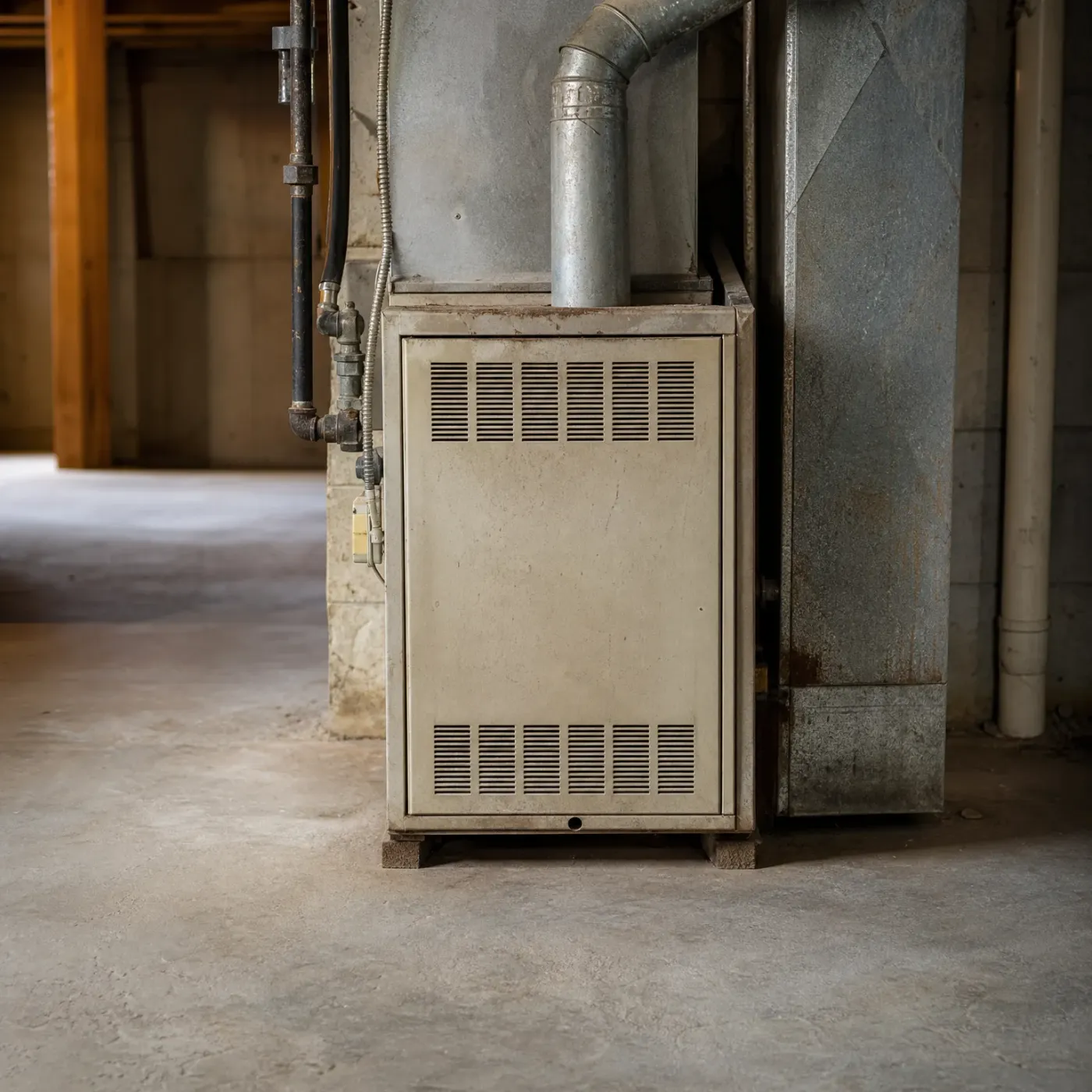
An older beige furnace with two louvered vent panels stands on a concrete basement floor, connected to galvanized ductwork and a metal flue pipe, with gas piping and flexible conduit on the wall behind.
Before you get your furnace maintenance
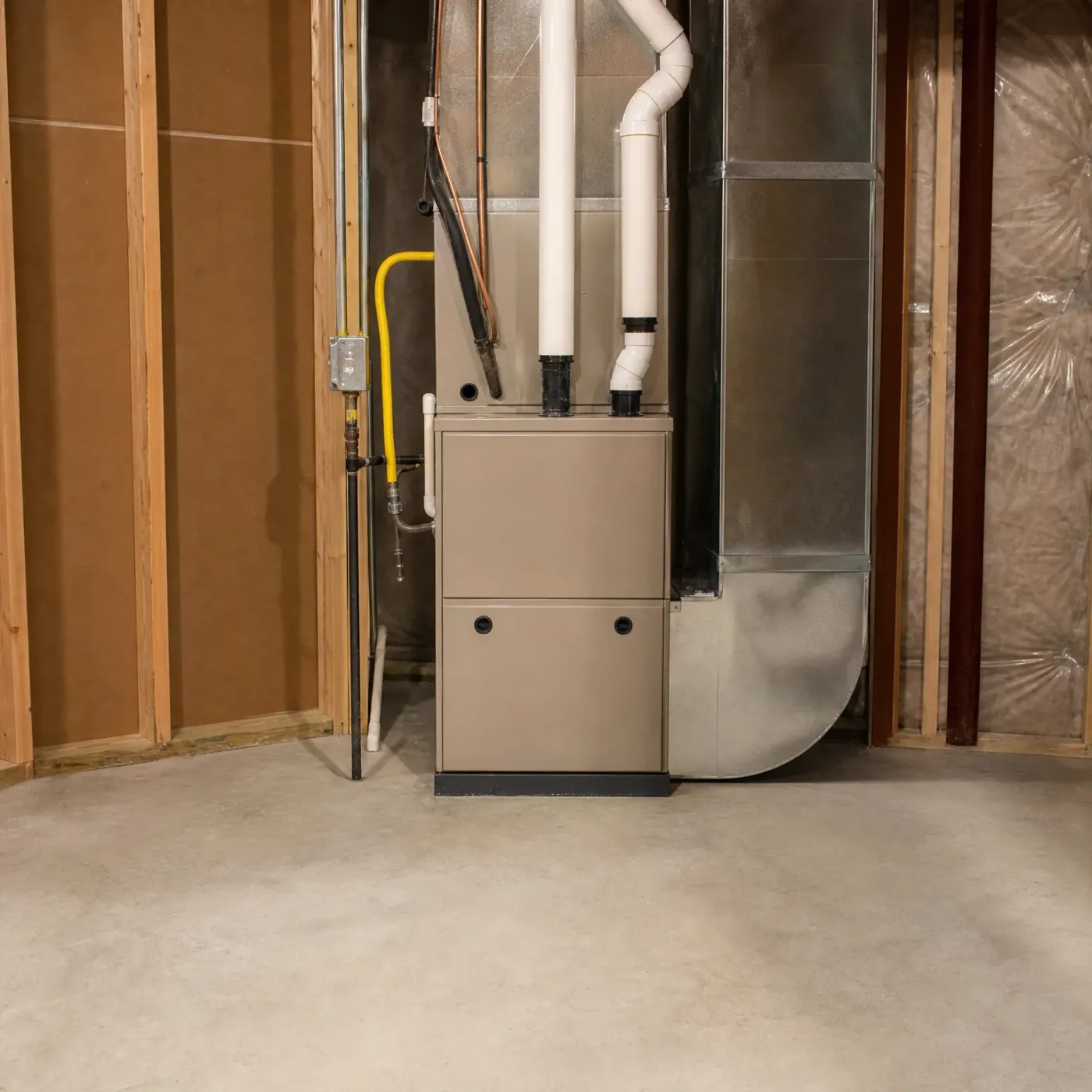
A beige high-efficiency furnace in an unfinished basement, with white PVC vent pipes, a yellow gas line, metal ductwork, and exposed wood framing on a concrete floor.
After you get your furnace maintenance

Ignore It or Stay Ahead of It

Skip the filter checks

  • The blower keeps pulling humid air through a clogged filter, and the motor works harder to move the same amount of air.
  • A filter packed with dust and pollen restricts airflow, which can let the heat exchanger run hotter than it should.
  • Dust that bypasses a sagging or torn filter settles inside the ductwork instead of getting caught.
  • You end up changing filters more often anyway, just after the damage to airflow is already done.
  • A system working against a clogged filter runs longer to reach the same temperature on the thermostat.

Stay ahead of it

  • A contractor checks the filter against what your blower actually needs, not just a generic swap schedule.
  • Someone who services furnaces in South Carolina all year knows how fast humidity here clogs a filter compared to drier climates.
  • Catching a restricted filter early keeps the blower motor from straining to move air through it.
  • A local contractor who works on this equipment every season knows which filter types hold up best against the humidity here.
  • Regular checks mean one person tracking your system's filter history, not you guessing at how dirty it's gotten.
  1. Humid air carries dust and pollen into the filter's weave.

  2. Moisture lets those particles stick instead of passing through.

  3. The clumped layer narrows the gaps the blower pulls air through.

  4. The blower draws harder to move the same air volume.

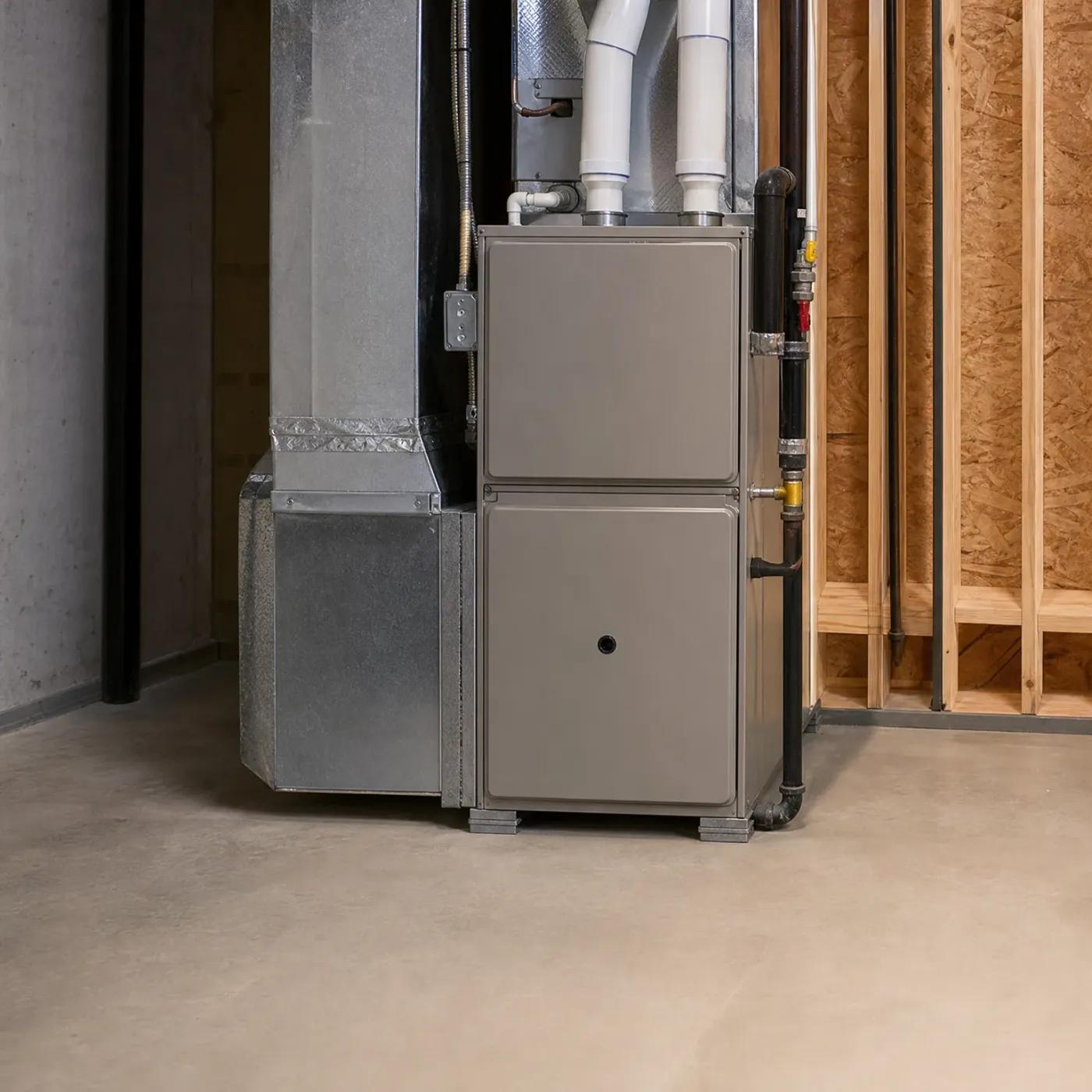
A gray high-efficiency furnace in a basement, connected to sheet-metal ductwork on the left and white PVC vent pipes above, with black gas and drain piping and an exposed wood-stud wall with OSB sheathing on the right.
A clean filter lets the blower pull air through at an even rate, so ductwork and gas lines keep working the way they were installed to.
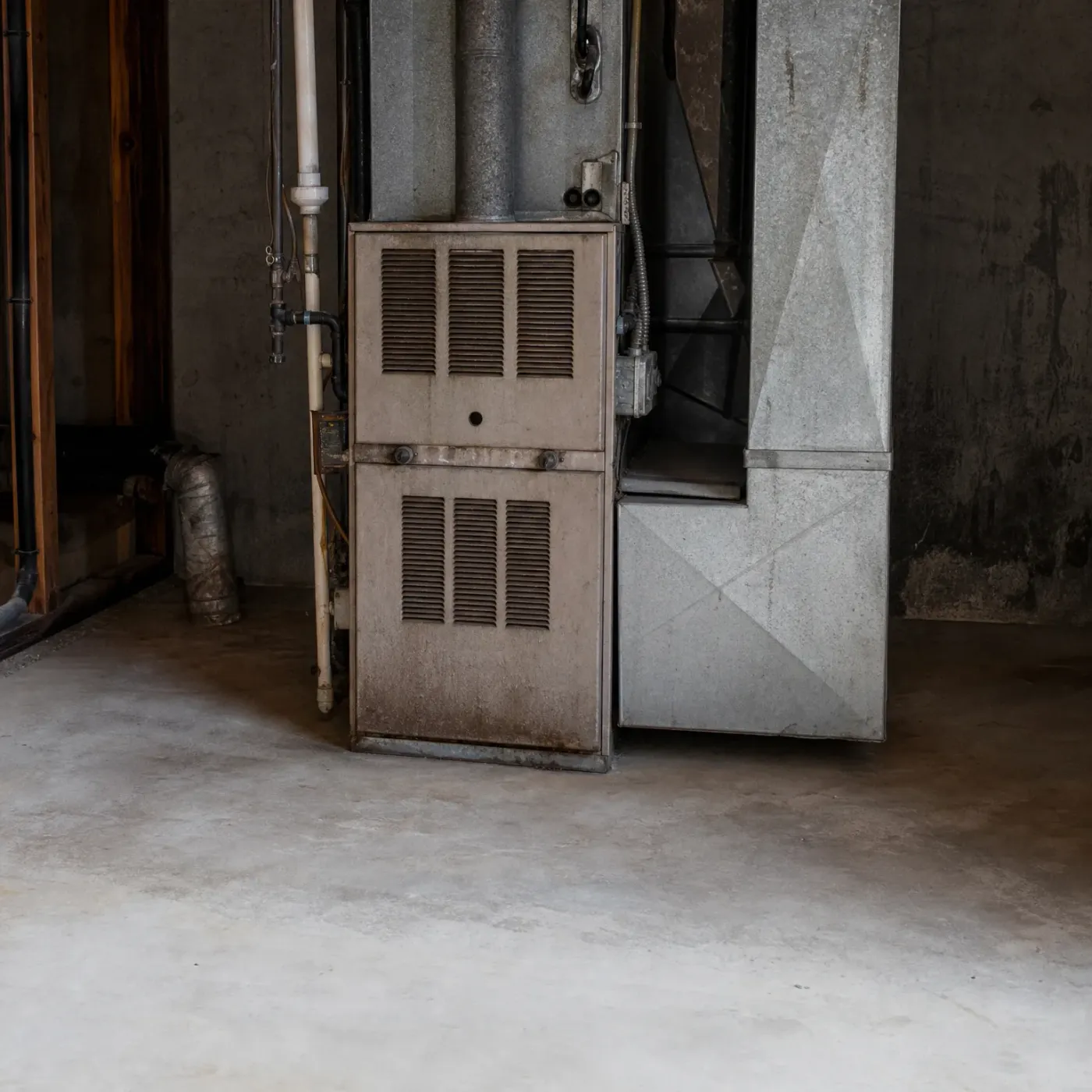
An older gas furnace with two louvered front panels stands on a concrete basement floor beside galvanized sheet-metal ductwork, pipes, and a weathered concrete wall.
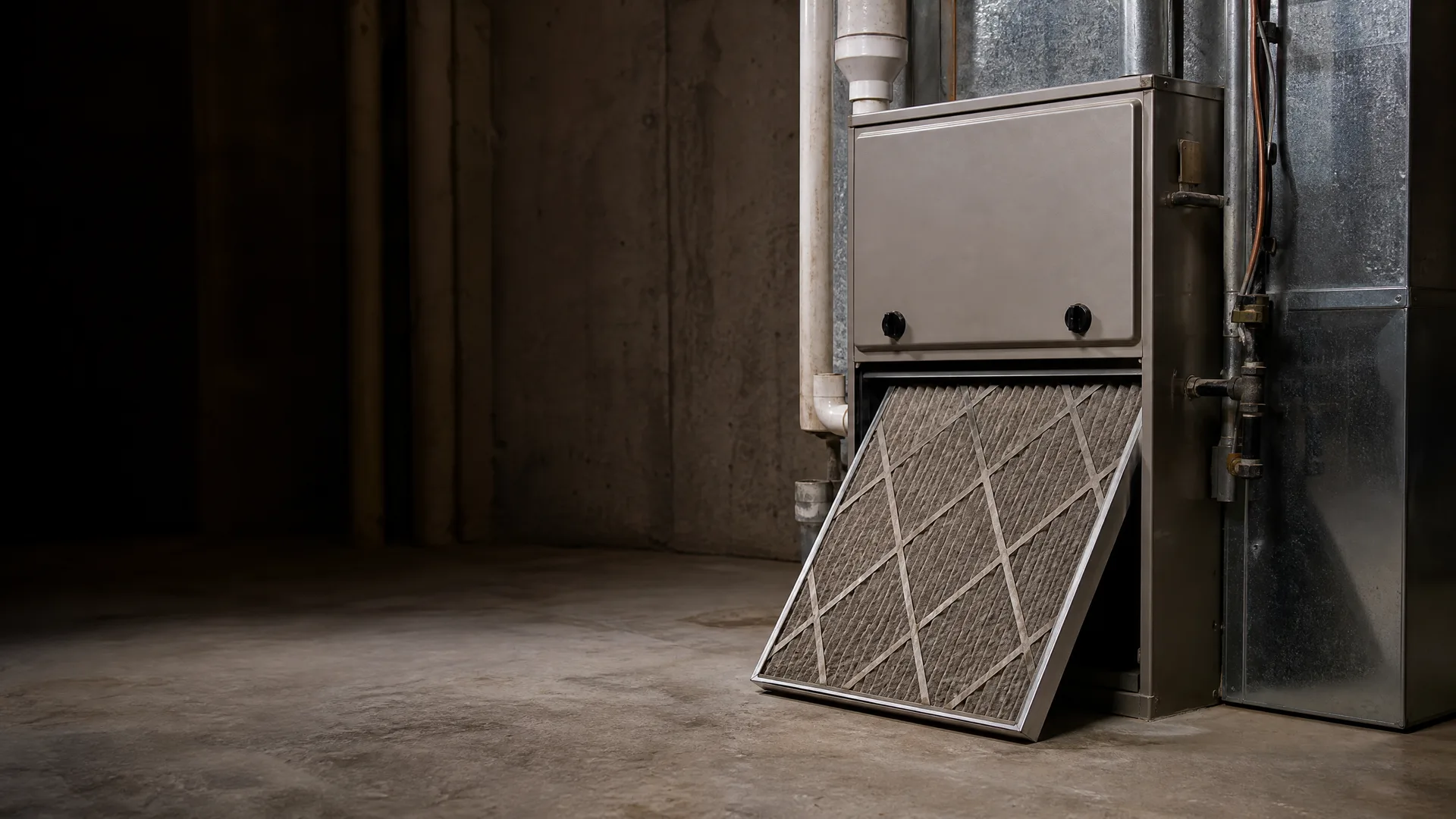
A filter left too long chokes airflow until the blower strains against it, and moisture stains on nearby walls hint at what else is struggling.
A dirty pleated air filter leans against a furnace with metal ductwork in a dim concrete basement.

You go down to change the filter on an October afternoon, the first cool snap after a long muggy summer. You pull it halfway out of the slot and stop. It's grey, matted, heavier than it should be, dust and pollen pressed into the weave instead of sitting loose on top. You run a finger along the edge and it leaves a line in the grime. The light from the bare bulb overhead catches the dust still drifting off it. You slide it the rest of the way out and set it against the furnace, thinking you'll call someone who works on these systems all the time, someone local who'll know by looking at it whether the blower took any strain from this.

Let someone else find the pro

That matted filter you pulled out in October didn't get that way on its own, and it won't be the last one. The same blower keeps pulling the same humid air through whatever filter is in there next, month after month. Someone who services furnaces in South Carolina every season knows how fast that buildup happens here compared to a drier state, and knows what to check beyond the filter itself, like whether the blower's been straining long enough to shorten its life or whether the heat exchanger's been running hotter than it should. A local contractor sees this pattern on nearly every call in this climate. Sending the request means one contractor who already knows what South Carolina humidity does to a furnace looks at yours, instead of you trying to figure out on your own whether what you found in that slot is routine or a sign of something worse.

A filter checked on schedule

You pull it, hold it to the light, and see mostly open weave with a thin layer of dust. It goes back in or gets swapped, and the blower keeps pulling air at the rate it was built for. The electric air handler doesn't have to run longer to push the same heat through the house. Nothing about the system is working harder than it has to, and whoever looks at it during a maintenance visit sees a furnace behaving the way it should, not one compensating for something upstream.


A filter left too long

You pull it and the weave is gone, packed grey with dust and pollen stuck together by months of muggy air. The blower has been straining against it for weeks, maybe longer, drawing harder to move the same amount of air through the house. The electric air handler runs longer to keep up, and the heat exchanger works under conditions it wasn't built for. By the time you notice, the system has already been working against itself, and whatever shows up at the next service call started here.

Winter nights average 36°F statewide

A 36°F night doesn't let your furnace rest and shut down. It cycles the electric air handler on and off for hours, and every cycle pulls more humid air through the filter already loaded from summer.

NOAA nClimDiv 1991-2020 county normals weighted by homes

What's actually going on here

  • A dirty filter in South Carolina comes down to humid air loading it faster than a dry climate would.
  • The fix isn't a different filter, it's catching the buildup before the blower has to work against it.
  • A local contractor who services furnaces all year in this climate knows how fast that filter loads and checks it before it chokes airflow.
  • One contractor takes the job, so you're not fielding calls from three different companies about the same filter.
  • Someone who works on electric air handlers every summer and winter here has seen what a neglected filter does to the heat exchanger and the motor.
  • Once the request goes out, finding that contractor stops being something you have to chase down yourself.

Your furnace filter loads up fast in South Carolina because the air coming through it is humid most of the year, and that humidity makes dust and pollen stick instead of passing through. That's the whole answer. The electric air handler runs on both sides of the year here, so the filter never really gets a break, and a clogged one makes the blower work harder and can let the heat exchanger run hotter than it should.

Catching that buildup before it chokes airflow is the part that actually matters, more than which filter you buy. That's what a furnace tune-up covers, and it's easier to hand off to someone who already knows this climate than to track on your own. Someone who services furnaces in South Carolina all year has seen what a loaded filter does to an electric air handler in July and in January, and knows to check it before it becomes a bigger problem with the motor or the exchanger.

When you send a request through this page, one licensed local contractor takes it, not three or four competing for your number. You get a call from someone who works on this exact kind of system in this exact climate, not a dispatcher reading off a script. Once that request is out, the job of finding the right person is off your plate. You've already done the part that matters, which is catching this before it turns into a bigger repair.

A dark wood cabinet with a paneled door and a ceramic pot of green foliage on top stands in a beige-walled room with white baseboard, a window at left, hardwood floor, and a patterned area rug.
A dark wood glass-front cabinet holding folded towels, woven baskets and a ceramic vase stands in a bathroom corner beside a window, with a potted fern and stacked towels on top and a freestanding tub partly visible at left.
A woven basket holding a green cushion and a cream fringed knit throw sits on a wood floor in a room corner beside a window and a dark wooden cabinet.
Corner of a room with a dark wood cabinet topped by a round vase, a linen curtain at a window, white baseboard, oak plank flooring with sunlight patches, and a woven jute rug in the foreground.
A dark wood sideboard against a pale wall holds a shallow stone bowl and a round ceramic vase with leafy branches, with sunlight from a curtained window falling across the wall, wood floor and woven rug.

One request and it's handed off

Only one pro gets your request, so you hear from one company.

Find a local pro

You only hire the pro if you want to.