Tell us about the job
Takes about a minute. No obligation.
Sizing a furnace for this county starts with what the burner and heat exchanger are actually being asked to carry. Homes in Abbeville County, SC run heat about five months a year, from November through March. A system that cycles through November and does not stop until March puts real hours on the ignition system, the burner assembly, and the heat exchanger welds. A contractor quoting a new furnace here has to account for that load before settling on equipment capacity, because an undersized unit runs longer cycles and wears its components faster. Proper installation, including duct sizing and static pressure checks, determines whether the equipment can pace itself across that season or fights the house every cycle.
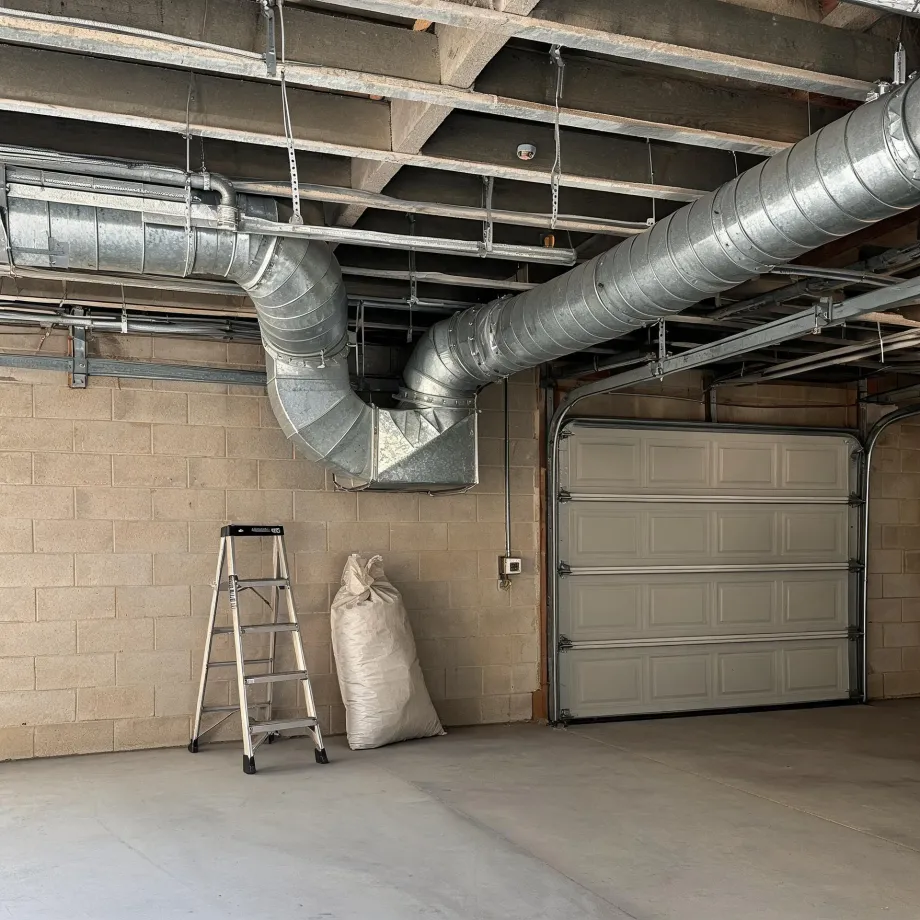
Ductwork laid out for an older generation of heating equipment shapes what a furnace installation actually requires here. Half the homes in Abbeville County, South Carolina were built in 1980 or earlier (2020-2024 ACS 5-year). That means a contractor assessing a job in this county is measuring whether the existing duct system can move the air a modern furnace pushes, and whether the electrical service at the point of installation carries what the new unit draws. Where either falls short, the ductwork or the panel becomes the first line of the project, and the furnace itself gets hung after that work is done.
What Gets Installed With a New Furnace
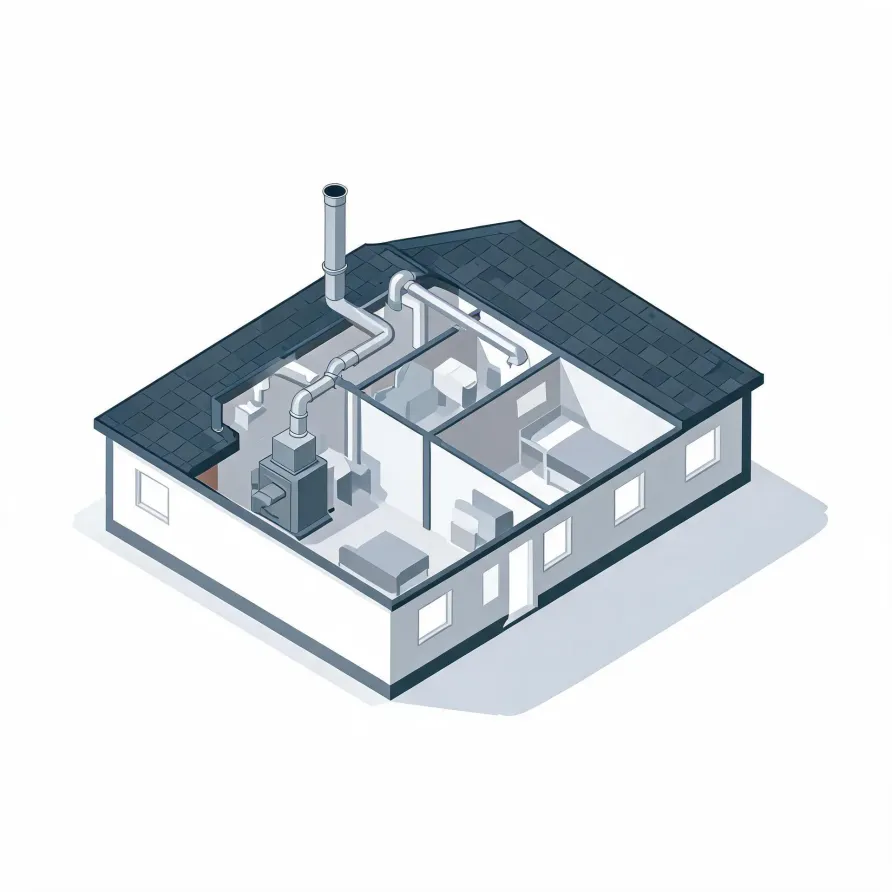
The furnace itself sits in a utility space, basement, or closet and is the unit that generates heat for the house. Attached to it is the air handler, which pulls air across the heat exchanger and pushes it into the supply side of the duct system. These two pieces are the core of what a contractor brings in and sets in place.
The thermostat mounts on an interior wall and is the control point the household uses to call for heat or cooling. A flue or venting pipe runs from the furnace to an exterior wall or the roof, carrying combustion gases out of the house. Refrigerant lines connect the furnace and air handler to the outdoor condenser unit, which sits on a pad outside.
The drawing shows a representative layout, and a licensed contractor determines what applies to this specific house.
Get matched in Abbeville CountyAbbeville County, by the numbers
35 severe weather events were recorded in Abbeville County, South Carolina between 2015 and 2024.
NOAA National Centers for Environmental Information, Storm Events Database, bulk CSV export, events 2015-01-01 through 2024-12-31.Half the homes in Abbeville County, South Carolina were built in 1980 or earlier (2020-2024 ACS 5-year).
U.S. Census Bureau, 2020-2024 American Community Survey 5-Year EstimatesAbbeville County, South Carolina holds 11,806 housing units (2020-2024 ACS 5-year).
U.S. Census Bureau, 2020-2024 American Community Survey 5-Year EstimatesOwners occupy 78.1% of the occupied homes in Abbeville County, South Carolina (2020-2024 ACS 5-year).
U.S. Census Bureau, 2020-2024 American Community Survey 5-Year EstimatesFurnace Installation Rules for Abbeville County, South Carolina5 sourced standards and codes
What happens when the contractor arrives
Non-weatherized gas furnaces manufactured on or after November 19, 2015 must reach 80.0 percent AFUE.
Non-weatherized oil-fired furnaces manufactured on or after November 19, 2015 must reach 83.0 percent AFUE.
Mobile home gas furnaces manufactured on or after November 19, 2015 must reach 80.0 percent AFUE.
Non-weatherized gas furnaces manufactured on or after December 18, 2028 must reach 95.0 percent AFUE, up from the 80.0 percent minimum that applies to units manufactured before that date.
Licensing Rules for HVAC Work in Abbeville County, South Carolina
South Carolina requires a mechanical contractor license for contracting work whose total cost of construction is greater than ten thousand dollars.
Severe Weather Events in Abbeville County
Weather puts direct load on heating and cooling equipment, and what this county sees shapes how hard a furnace has to work and how long it stays reliable. That makes local conditions a practical factor in any installation decision.
35 severe weather events, 2015–2024. Source: NOAA National Centers for Environmental Information, Storm Events Database.